Chatfuel Explained
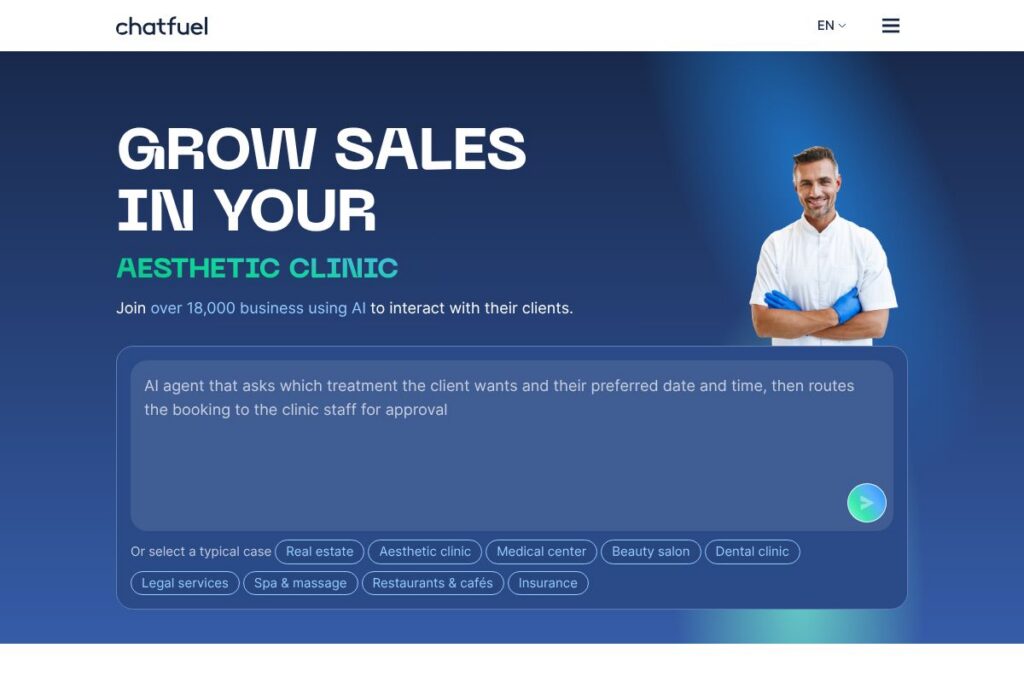
Chatfuel is a conversational platform that connects businesses to customers on WhatsApp using the WhatsApp Business API. It combines rule-based flows, automation, and generative AI to handle lead capture, appointment booking, order management, and customer support inside WhatsApp and other messaging channels.
Compared with ManyChat, which focuses heavily on Messenger and Instagram-first flows, Chatfuel emphasizes enterprise-grade WhatsApp integration and official WhatsApp API connectivity. Compared with Twilio, which is a communications infrastructure provider, Chatfuel offers a higher-level builder and prebuilt templates aimed at marketers and support teams rather than raw API primitives. Compared with WATI, Chatfuel competes on usability and AI features, while WATI often targets very large volume transactional messaging.
All of this makes Chatfuel especially useful for sales and support teams that need a single interface to manage WhatsApp conversations, automated offers, and AI-assisted replies. It fits businesses that want to combine ChatGPT-style responses with structured messaging and integration into CRMs and booking systems.
How Chatfuel Works
Chatfuel runs as a cloud SaaS platform that connects to your WhatsApp Business API account and other messaging channels. You define conversational flows in a visual builder, add decision logic, and connect AI response modules so the bot can hand off complex queries to ChatGPT-style models when needed.
Typical implementation starts with template-based flows for lead capture or appointment booking, then hooks those flows into CRM records and notification channels. Teams route chats to human agents for escalation and use automated follow-ups, broadcasts, and conditional offers to increase conversion and repeat visits.
What does Chatfuel do?
Chatfuel provides a unified set of features focused on conversational commerce, support automation, and AI-assisted messaging. Core capabilities include WhatsApp Business API connectivity, prebuilt industry templates, ChatGPT integration for natural replies, CRM and e-commerce integrations, and analytics for message performance.
Let’s talk Chatfuel’s Features
WhatsApp Business API integration
Chatfuel connects to the official WhatsApp Business API so messages are sent using approved WhatsApp channels and templates. This ensures reliable delivery, supports verification workflows, and lets teams use message templates for notifications and transactional messaging.
AI-assisted replies (ChatGPT integration)
The platform integrates generative AI to draft responses, suggest next actions, and handle freeform customer questions. Teams can control when AI is used and refine prompts to maintain brand voice and compliance.
Visual flow builder and templates
A drag-and-drop builder helps teams create screens, conditional logic, and multi-step funnels without code. Industry templates speed up setup for use cases like appointment booking, lead qualification, and order updates.
CRM and e-commerce integrations
Chatfuel connects to CRMs, Shopify, payment gateways, and booking systems to sync customer data and trigger actions from conversations. These integrations enable automated order confirmations, appointment scheduling, and loyalty reminders.
Broadcasts and campaign tools
Built-in broadcast capabilities let teams send targeted messages and promotional offers to opted-in contacts. Segmentation and personalization options help increase confirmed appointments and repeat visits through reminders and automated offers.
Reporting and analytics
Dashboards show conversation volume, conversion rates, response times, and campaign performance. These metrics help teams optimize flows, measure lift from automated offers, and identify escalation points for human agents.
With these capabilities, Chatfuel helps businesses move from one-off conversations to repeatable messaging funnels that support sales, bookings, and ongoing customer relationships.
Chatfuel pricing
Chatfuel uses a SaaS subscription model with flexible plans that scale by features and messaging volume; there is no dedicated public pricing page found on their site. For specific plan tiers, messaging allowances, and enterprise options, view Chatfuel’s pricing and plans on Chatfuel’s homepage.
What is Chatfuel Used For?
Chatfuel is commonly used for customer support, appointment booking, and conversational sales on WhatsApp. Businesses use it to automate FAQs, send appointment and delivery reminders, and run targeted promotional campaigns via broadcast messages.
Clinics, restaurants, salons, insurance brokers, and retail operations use Chatfuel to increase confirmed appointments, drive repeat visits with loyalty reminders, and automate upsell offers inside the messaging apps customers already use.
Pros and Cons of Chatfuel
Pros
- Official WhatsApp API partner: Using the official API ensures compliance with WhatsApp policies, verified message templates, and higher deliverability for transactional and promotional messages.
- AI-assisted customer replies: Integrating ChatGPT-style responses helps teams handle open-ended queries, reduce manual responses, and maintain a consistent tone across conversations.
- Prebuilt templates for industries: Templates for clinics, restaurants, and service businesses accelerate deployment and reduce time to value by covering common workflows like bookings and confirmations.
Cons
- Dependent on WhatsApp template approval: Using message templates requires WhatsApp approval, which can slow some promotional workflows and requires careful message formatting.
- Potential complexity for high-volume enterprises: Very large messaging volumes or highly customized workflows may require enterprise-level setup and coordination with WhatsApp API providers, adding implementation effort.
Does Chatfuel Offer a Free Trial?
Chatfuel offers a 7-day free trial that lets teams test core features including flow building, template messaging, and basic AI responses; trial terms and available features may vary by region or account type. To start a trial or compare plan limits, visit Chatfuel’s homepage to sign up.
Chatfuel API and Integrations
Chatfuel provides connectors and integration options for CRMs, e-commerce platforms, and support tools; the Chatfuel integrations page lists supported services and setup instructions. Explore Chatfuel integrations to see connectors for Shopify, Google Sheets, Zapier, and common CRM systems.
For developers, the platform exposes endpoints and webhooks for event-driven automation and data sync; consult the Chatfuel API documentation for details on authentication, webhooks, and supported payloads. Chatfuel also links to the official WhatsApp Business API documentation for account setup and template management.
10 Chatfuel alternatives
Paid alternatives to Chatfuel
- ManyChat — Conversational marketing builder with strong Messenger and Instagram support, includes broadcast and automation tools for lead generation.
- Twilio — Programmable communication APIs for SMS, WhatsApp, and voice, suited for teams that need low-level control over messaging infrastructure.
- WATI — WhatsApp-first platform focused on customer support and marketing automation with agent inbox and bulk messaging tools.
- Zendesk — Customer support suite with omnichannel messaging, ticketing, and analytics for larger service teams.
- Intercom — Conversational support and product messaging platform that combines bot workflows with live chat and customer data.
- Freshdesk — Support platform with integrated messaging channels, bots, and ticketing workflows for customer service teams.
- MessageBird — Cloud communications platform offering WhatsApp channels, SMS, and omnichannel routing with a focus on global delivery.
Open source alternatives to Chatfuel
- Rasa — Open source conversational AI framework for building custom chatbots with on-premise deployment and full control over NLU and dialogue.
- Botpress — Developer-focused bot building platform that can be self-hosted, with modules for NLU, flows, and analytics.
- Chatwoot — Open source customer engagement suite with inboxes for WhatsApp, email, and social channels, plus automation rules.
- Rocket.Chat — Open source messaging platform that can be extended to handle customer conversations and integrate with external bots and services.
Frequently asked questions about Chatfuel
What is Chatfuel used for?
Chatfuel is used for building automated WhatsApp conversations for sales, booking, and customer support. Teams deploy templates and AI-assisted flows to capture leads, confirm appointments, and handle common support questions.
Does Chatfuel integrate with WhatsApp Business API?
Yes, Chatfuel is an official WhatsApp Business API partner. That integration enables approved template messaging, verified business profiles, and reliable delivery through WhatsApp’s channels.
Can Chatfuel use ChatGPT for replies?
Yes, Chatfuel supports generative AI integration to draft or suggest replies. Teams can configure when AI handles messages and combine it with rule-based flows for controlled automation.
How much does Chatfuel cost?
Chatfuel uses subscription-based plans that scale by features and messaging volume. Because there is no dedicated public pricing page, contact Chatfuel or check Chatfuel’s homepage for up-to-date plan details and enterprise options.
Is Chatfuel suitable for small businesses?
Chatfuel can work well for small businesses that use WhatsApp to communicate with customers. Prebuilt templates and the visual builder let small teams deploy booking and support flows without heavy developer resources.
Final Verdict: Chatfuel
Chatfuel stands out as a focused platform for businesses that want to run sales and support conversational workflows on WhatsApp with added generative AI capabilities. Its strength is combining WhatsApp Business API connectivity, industry templates, and AI-assisted replies into a single interface for marketing and support teams.
Compared with Twilio, which charges for low-level API usage and requires more engineering, Chatfuel provides a higher-level, no-code builder that helps non-technical teams move faster. For organizations evaluating cost and control, Twilio may be more flexible on pricing but Chatfuel lowers implementation time and adds ready-made templates for common business cases.
If your priorities are fast deployment, WhatsApp-centric customer journeys, and AI-enhanced replies for sales and support, Chatfuel is a practical choice. For teams that need full control over messaging infrastructure or self-hosted solutions, consider developer-oriented alternatives like Twilio or open source options such as Rasa and Botpress.