What is WebPT
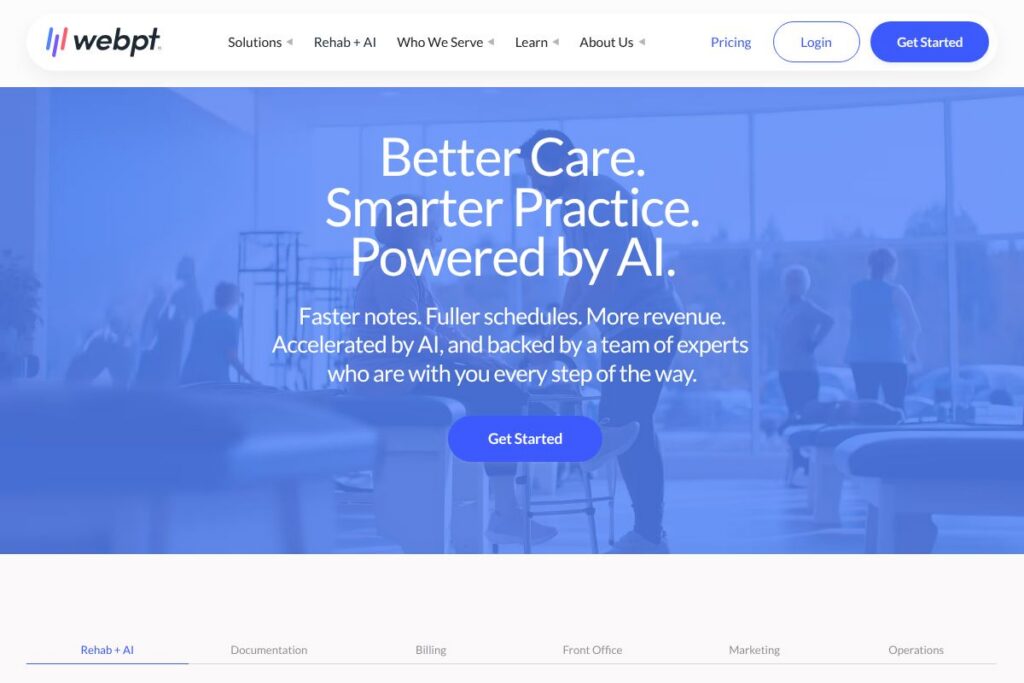
WebPT is a rehab therapy electronic medical record and practice management platform designed specifically for physical therapists, occupational therapists, and speech-language pathologists. It centralizes documentation, scheduling, billing, outcomes tracking, and patient communications in a single, specialty-focused system so clinics can reduce administrative work and focus on clinical care.
Compared with general EHRs like athenahealth and Kareo, WebPT is more narrowly focused on rehab workflows, templates, and outcome measures that matter to therapy teams. Against specialty competitors such as Therabill and Clinicient, WebPT emphasizes an integrated platform that combines EMR with marketing and practice growth tools rather than billing-only solutions.
WebPT does well at matching clinical workflows to documentation and billing rules, providing built-in outcome measures and rehab-specific templates, and offering practice-level business reporting. All of this makes it a strong choice for independent clinics, multi-site therapy groups, and health systems running outpatient rehab sites who need a therapy-specific EMR with integrated revenue tools.
How WebPT Works
WebPT organizes practice operations around patient encounters. Clinicians use configurable templates, standardized tests, and AI-assisted charting to produce compliant notes quickly, while front desk staff manage scheduling, intake, and payments from the same interface.
Claims move through a dedicated billing workflow where rules and edits catch common coding issues before submission, and reporting dashboards track revenue, denials, and payer performance. Practices can opt to use WebPT’s revenue cycle management services or run billing in-house with the platform’s tools.
AI features automate repetitive tasks such as converting voice or conversation into draft notes, surfacing coding suggestions, and identifying documentation gaps, which shortens charting time and reduces audit risk. Marketing and patient engagement modules run outreach campaigns, manage online reputation, and convert leads into booked appointments.
WebPT features
WebPT groups clinical, administrative, and business tools into a single platform. Core capabilities include AI-assisted documentation, rehab-specific outcome measures, practice management dashboards, billing and RCM workflows, scheduling and intake automation, and patient marketing tools. Recent emphasis is on AI features that accelerate note creation and compliance checks.
Let’s talk WebPT’s Features
AI-powered documentation
AI assists clinicians by turning voice or encounter notes into structured, compliant documentation and by offering configurable templates to match practice workflows. This reduces time spent charting, helps capture all billable units, and standardizes notes across clinicians for easier audits.
Billing and revenue cycle management
The platform includes claim editing, denial management, payer rules, and reporting to streamline collections and reduce time to payment. Practices can choose to handle billing with WebPT software or engage full-service RCM experts who manage follow-up and appeals on their behalf.
Scheduling and front office automation
Scheduling tools reduce gaps and no-shows through appointment reminders and configurable intake workflows that gather patient data before arrival. The front desk sees eligibility, copay collection, and outstanding balances in one place, which cuts manual entry and speeds check-in.
Outcomes and standardized testing
Built-in outcome measures and standardized tests let clinicians track patient progress over time and generate objective reports for clinical decision making and payer reporting. Aggregated outcome data also supports quality initiatives and value-based care conversations.
Marketing and patient communications
WebPT provides tools for automated messaging, review management, and local SEO improvements to attract and convert patients. Campaigns and remarketing sequences are designed for rehab clinics to increase new patient bookings and improve online reputation.
Practice analytics and reporting
Real-time dashboards surface financial, operational, and clinical metrics so managers can spot trends and prioritize improvements. AI-backed checks identify missed revenue, coding anomalies, and compliance risks, enabling proactive corrective action.
With WebPT you get a therapy-specific EMR that combines clinical documentation, revenue workflows, scheduling, and growth tools. The biggest benefit is the platform’s alignment to rehab workflows, which reduces administrative overhead while improving documentation quality and financial visibility.
WebPT pricing
WebPT uses a flexible, enterprise-oriented pricing approach tailored to practice size, feature needs, and whether you choose in-house billing or full-service revenue cycle management. For updated pricing and plan options, view WebPT’s current pricing options on the WebPT homepage.
What is WebPT Used For?
WebPT is widely used for clinical documentation and charting in outpatient rehab clinics, replacing generic EHR templates with therapy-specific profiles and outcome measures. Clinicians use it to document evaluations, progress notes, and discharge summaries quickly while maintaining payer compliance.
Administrators use WebPT for scheduling, patient intake, payments, and revenue cycle management, and marketing teams use its patient engagement tools to generate leads and manage online reputation. Its reporting and analytics help practice owners track profitability per clinician, location, and payer.
Pros and Cons of WebPT
Pros
- Specialized for rehab therapy: The platform includes templates, outcome measures, and workflows designed specifically for physical therapy, occupational therapy, and speech therapy clinicians, which reduces the need for heavy customization.
- AI-assisted documentation: AI features speed note creation, suggest coding and units, and help standardize notes across clinicians to lower audit risk and improve billing capture.
- Integrated platform: Combining EMR, scheduling, billing tools, marketing, and analytics in one system reduces the number of point solutions needed to run a therapy practice.
- Optional RCM services: Practices can choose full-service revenue cycle management for hands-off billing, which is useful for clinics that prefer to outsource collections and denials follow-up.
Cons
- Enterprise-style pricing model: Pricing is tailored and may be higher for very small practices unless they select a limited feature set, so budget-conscious solo practitioners should compare costs carefully.
- Learning curve for feature depth: The platform’s breadth and configurability can require time for onboarding and training, especially for teams new to integrated EMR and RCM workflows.
- Integration needs for some third-party tools: While WebPT supports many integrations, certain niche tools may require custom work or middleware to connect cleanly to clinic workflows.
Does WebPT Offer a Free Trial?
WebPT offers free demos and trial opportunities for prospective practices. You can request a walkthrough or trial to evaluate documentation workflows, billing capabilities, and practice reporting before committing; visit the WebPT homepage to request a demo or start a trial.
WebPT API and Integrations
WebPT provides developer resources and integration options so clinics can connect the platform to practice tools and third-party services. The WebPT developer resources describe integration capabilities, API access, and partner connectors for common systems.
Common integrations include practice accounting, patient payment processors, practice management add-ons, and specialized rehab devices or outcome measure systems, which helps clinics keep existing tools while consolidating core workflows in WebPT.
10 WebPT alternatives
Paid alternatives to WebPT
- Therabill — A billing-focused solution for therapy practices that simplifies claim submission and follow-up workflows and is often chosen by practices that only need billing automation.
- Clinicient — A therapy EMR and billing platform with a focus on enterprise deployments and analytics for multi-site therapy organizations.
- Kareo — A general ambulatory EHR and billing suite aimed at small practices, with integrated billing and practice management features.
- athenahealth — A cloud-based EHR and practice management system with broad interoperability and an emphasis on network-enabled services.
- Jane — A lightweight clinic management and booking system popular with small rehab and allied health practices, offering scheduling, charting, and payments.
- Practice Perfect — Clinic management software with scheduling, clinical records, and billing tailored to allied health practices.
- Practice Fusion — A cloud EHR used by small outpatient clinics with charting, e-prescribing, and lab integrations.
Open source alternatives to WebPT
- OpenEMR — A widely used open source electronic medical record with customization options for different specialties and a large community for support.
- OpenMRS — A modular open source medical record platform designed for flexibility and global deployments, often used in low-resource settings.
- GNU Health — An open source health and hospital information system with clinical, administrative, and public health modules.
- Oscar EMR — An open source ambulatory EMR used primarily in Canada, configurable for various clinical workflows.
Frequently asked questions about WebPT
What is WebPT used for?
WebPT is used for clinical documentation, scheduling, billing, and practice management for rehab therapy clinics. Therapists use it to document care with therapy-specific templates and outcome measures while administrators manage billing and operations.
Does WebPT offer revenue cycle management?
Yes, WebPT provides both software-based billing tools and optional full-service revenue cycle management. Practices can choose to handle billing in-house with the platform or engage WebPT’s RCM experts for claims follow-up and denials management.
Can WebPT integrate with other clinic software?
WebPT supports integrations and developer APIs to connect with payment processors, accounting systems, and ancillary tools. Integration options help clinics retain key third-party systems while consolidating clinical and billing workflows.
How does WebPT help with compliance and audits?
WebPT includes compliance checks, standardized documentation templates, and AI-backed audits to reduce risk. Built-in checks and reporting help identify missing elements in notes and flag potential coding or documentation issues before claims are submitted.
Is WebPT suitable for multi-site therapy organizations?
Yes, WebPT supports multi-site deployments with centralized reporting and role-based access controls. Its analytics and operational dashboards are designed to surface performance across locations and clinicians for enterprise management.
Final verdict: WebPT
WebPT stands out as a therapy-focused EMR and practice management platform that brings together documentation, billing, scheduling, analytics, and marketing with AI-assisted features. Its strengths are specialty-tailored templates, outcome measures, and the option to combine software with full-service RCM, which together reduce administrative burden and improve revenue capture.
Compared with a billing-first competitor like Therabill, WebPT offers broader clinic management and marketing capabilities beyond core billing, making it a better fit for practices that want an all-in-one platform. Practices primarily seeking low-cost, billing-only solutions may prefer Therabill, while clinics that need integrated EMR, patient engagement, and growth tools will find WebPT more comprehensive.
For pricing details, demos, and trial options, check WebPT’s current offerings on the WebPT homepage and contact their team to get a plan tailored to your clinic’s size and needs.