What is Wire
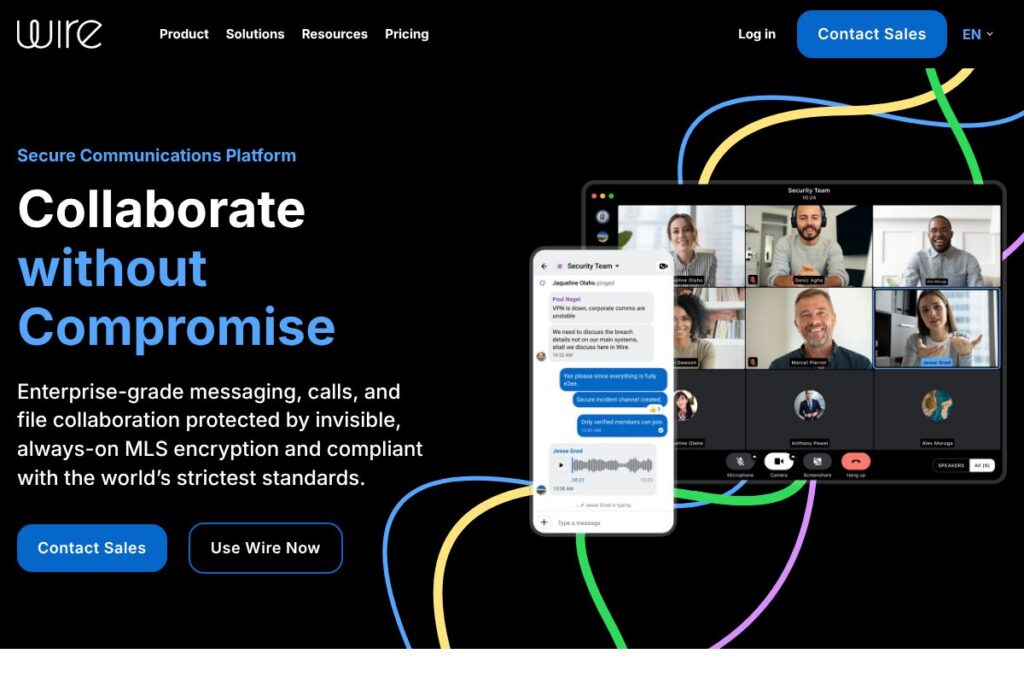
Wire is a secure collaboration platform built around always-on end-to-end encryption and data sovereignty features for teams and organizations. It provides messaging, voice and video calls, file sharing, document collaboration, and administrative controls across desktop, web, and mobile clients, with support for enterprise identity standards such as SAML and SCIM.
Compared with mainstream team tools, Wire focuses on security and compliance first. Slack emphasizes integrations and workflow automation with a per-user subscription model, while Microsoft Teams ties collaboration into Microsoft 365 with broad ecosystem integrations. Wire differs by prioritizing invisible end-to-end encryption, zero-knowledge key handling, and options for on-premises or federated deployments that give organizations stronger control over data sovereignty.
Wire does real work for regulated organizations and teams that need both usability and provable security. It excels at secure external collaboration, administration at scale, and meeting strict compliance rules, which makes it especially useful for public sector entities, legal teams, and enterprises with complex data protection requirements.
How Wire Works
Wire uses client applications for web, desktop, and mobile that communicate using end-to-end encryption based on modern cryptographic protocols such as MLS for group conversations. User devices hold encryption keys so message and file contents remain private and inaccessible to service operators, while the platform manages metadata and delivery in a way that keeps encryption invisible to end users.
Teams typically integrate Wire with their identity provider using SAML single sign-on and SCIM provisioning to manage users and groups centrally. Administrators set granular policies for retention, export, and federation, and can choose cloud, on-premises, or hybrid deployment models to meet organizational requirements.
Workflows commonly start with creating teams and secure channels, inviting external collaborators via secure links or managed federation, running instant meetings for voice or video, and sharing files directly in conversations where access is protected by the same encryption model.
Wire features
Wire organizes collaboration around secure messaging and calls, compliant file handling, administrative controls, and developer extensions. Core capabilities include always-on end-to-end encryption, voice and video conferencing, file sharing with secure storage options, SAML and SCIM support for enterprise identity, and an Integrations SDK for building encrypted apps and bots inside the platform.
The platform includes several powerful capabilities:
End-to-end encryption
Wire applies end-to-end encryption across messages, voice, video, and file attachments so that only participants can read or access content. This zero-knowledge approach benefits teams that must meet privacy and compliance requirements, because service operators cannot decrypt conversation contents.
MLS group security
Wire uses Messaging Layer Security (MLS) for group conversations to provide scalable, forward-secure group encryption that handles membership changes efficiently. Teams gain stronger cryptographic guarantees for large group chats and meeting scenarios where participants join and leave frequently.
Voice and video conferencing
Wire supports instant and scheduled voice and video meetings with multi-party conferencing, screen sharing, and in-call controls. Meetings use the same encryption model as chat, which helps organizations needing secure remote collaboration without separate conferencing tools.
File sharing and document collaboration
Files can be shared in conversations and stored under enterprise-managed policies with options for on-premises or cloud storage. Administrators can enforce retention and access controls so shared documents remain under organizational governance and compliant handling.
Enterprise identity and administration
SAML single sign-on, SCIM provisioning, and granular admin controls allow centralized user lifecycle management and policy enforcement. This helps IT teams apply consistent access rules, audit logs, and compliance settings across distributed teams.
On-premises and federated deployment
Wire supports on-premises deployment and federated environments where organizations maintain data sovereignty or interconnect trusted domains. These deployment choices suit governments and regulated industries that require local control and transparency.
Integrations SDK and developer tools
The Wire Integrations SDK enables building encrypted apps, bots, and automations that run inside the platform while preserving end-to-end security. Organizations can add automation, AI assistants, and workflow integrations that operate without exposing plaintext to external services; see the Wire Integrations SDK blog posts for developer guidance.
With Wire, the biggest benefit is secure collaboration that does not force trade-offs between usability and compliance. Teams get modern messaging and meeting features while keeping strong cryptographic protections and administrative controls suitable for enterprise and public sector use.
Wire pricing
Wire uses a hybrid pricing approach with a free entry-level option for individuals and custom-priced enterprise plans designed for organizations with compliance, sovereignty, or managed deployment needs. Pricing is often tailored by seat count, deployment model, and required support or compliance features.
Enterprise and team pricing
Wire provides custom enterprise pricing for organizations that require SAML, SCIM, on-premises or federated deployment, and enhanced administrative controls. For pricing details and to discuss needs such as on-premises installs or data sovereignty, contact the sales team via Wire’s contact page or review options on Wire’s homepage.
What is Wire Used For?
Wire is commonly used for secure internal communication, regulated collaboration across partner organizations, and confidential meetings where data privacy and compliance are mandatory. Organizations use Wire to replace unencrypted chat tools when regulatory oversight or contractual confidentiality makes stronger protections necessary.
Typical scenarios include government agencies that need data sovereignty, legal and financial teams that require client confidentiality, and multinational enterprises that must maintain consistent security policies across borders. Wire is also used for secure contractor and supplier collaboration where external guests need controlled access.
Pros and cons of Wire
Pros
- Strong cryptography foundation: Wire applies end-to-end encryption across messaging, calls, and files, minimizing the risk of data exposure and supporting compliance efforts with zero-knowledge key handling.
- Data sovereignty and deployment options: Organizations can choose cloud, on-premises, or federated deployments to meet jurisdictional and regulatory requirements, accompanied by granular admin controls.
- Enterprise identity integrations: Built-in SAML single sign-on and SCIM streamline user provisioning and policy enforcement across large organizations.
- Developer extensibility: The Integrations SDK allows secure bots and automations that operate inside the encrypted environment, enabling customized workflows without sacrificing privacy.
Cons
- Enterprise focus may be overkill for small teams: Organizations that do not need strict compliance or data sovereignty might find Wire s focus and deployment options more complex than lightweight chat apps.
- Ecosystem and app integrations: While extensible via SDK, Wire has fewer out-of-the-box third-party integrations than some mass-market collaboration platforms, which may require custom development for specific workflows.
- Custom pricing for larger deployments: Enterprise pricing is typically customized, so procurement may take longer than buying standard per-seat subscriptions from mainstream vendors.
Does Wire Offer a Free Trial?
Wire offers a free tier for individuals and trial or pilot options for teams, with enterprise plans available via sales. The free option allows basic use of messaging and calls, while organizations evaluating enterprise controls or on-premises deployments can engage with Wire sales for pilot arrangements and detailed evaluations.
Wire API and Integrations
Wire provides developer tooling and an Integrations SDK for building secure, end-to-end encrypted apps and automations that run within the platform. The Wire Integrations SDK blog posts explain how to create bots, AI assistants, and workflow integrations that preserve encryption guarantees.
For identity and provisioning, Wire supports SAML single sign-on and SCIM provisioning to connect with identity providers such as Okta and Azure AD, and it can integrate with enterprise directories to streamline user management and access control.
10 Wire alternatives
Paid alternatives to Wire
- Slack – A widely used team messaging platform with extensive third-party integrations and a per-user subscription model suited to broad collaboration needs.
- Microsoft Teams – Teams integrates deeply with Microsoft 365 apps and provides chat, meetings, and file collaboration within the Microsoft ecosystem.
- Zoom – Focused on video meetings and conferencing, Zoom offers robust meeting and webinar features with optional chat and calling add-ons.
- Cisco Webex – An enterprise conferencing and collaboration suite that includes secure meetings, calling, and integrated hardware options for rooms.
- Google Workspace – Provides chat, meetings, and document collaboration tightly integrated with Gmail and Google Drive for organizations invested in Google services.
- Mattermost (Enterprise Cloud) – Commercial hosted offering from an open core vendor, focused on secure collaboration with team and DevOps workflows.
- RingCentral – A communications platform combining calling, messaging, and meetings with business telephony features.
Open source alternatives to Wire
- Element – An open source client built on the Matrix protocol that supports end-to-end encrypted messaging, federation, and self-hosting.
- Mattermost – A self-hosted, open source collaboration platform providing messaging and integrations for teams that prefer full control over infrastructure.
- Rocket.Chat – An open source team chat platform with self-hosting options and a growing set of integrations for enterprise deployments.
- Jitsi – Open source video conferencing software designed for secure meetings and self-hosted deployments.
- Signal – An open source secure messaging app with strong encryption for one-to-one and small group communication, used for private conversations.
Frequently asked questions about Wire
What is Wire used for?
Wire is used for secure team communication, encrypted meetings, and compliant file sharing. Organizations choose it when privacy, data sovereignty, and administrative control are priorities.
Does Wire offer end-to-end encryption for calls?
Yes, Wire encrypts voice and video calls end to end. Calls, screen sharing, and attachments are protected under the same encryption model as messaging.
Can Wire integrate with single sign-on providers?
Yes, Wire supports SAML single sign-on and SCIM provisioning. This allows integration with identity providers for centralized authentication and user lifecycle management.
Is Wire suitable for government use?
Yes, Wire provides deployment options and controls aimed at government and public sector needs. It supports on-premises and federated setups to help meet digital sovereignty and compliance requirements.
Does Wire provide developer tools or an API?
Yes, Wire offers an Integrations SDK and developer tooling for building secure bots and apps inside the platform. Developers can extend workflows and add custom automations without exposing plaintext conversation contents.
Final verdict: Wire
Wire stands out for combining modern collaboration features with a strong cryptographic foundation and deployment choices that support data sovereignty. It does particularly well when organizations need provable end-to-end encryption, granular admin controls, and options for on-premises or federated hosting while keeping a usable interface for everyday team collaboration.
Compared with Slack, which follows a per-user subscription model and emphasizes a broad integration ecosystem, Wire targets organizations that place higher priority on encryption and compliance. Slack may be easier to adopt for general-purpose teams due to its integration marketplace, while Wire gives security-sensitive teams clearer guarantees and deployment pathways tailored to regulatory requirements.
All in all, Wire is a practical choice for enterprises, public sector bodies, and regulated industries that require secure, auditable collaboration without sacrificing usability. For teams more concerned with rapid integration and a large app ecosystem, mainstream platforms like Slack or Microsoft Teams may be a more convenient fit.