What is Bombora
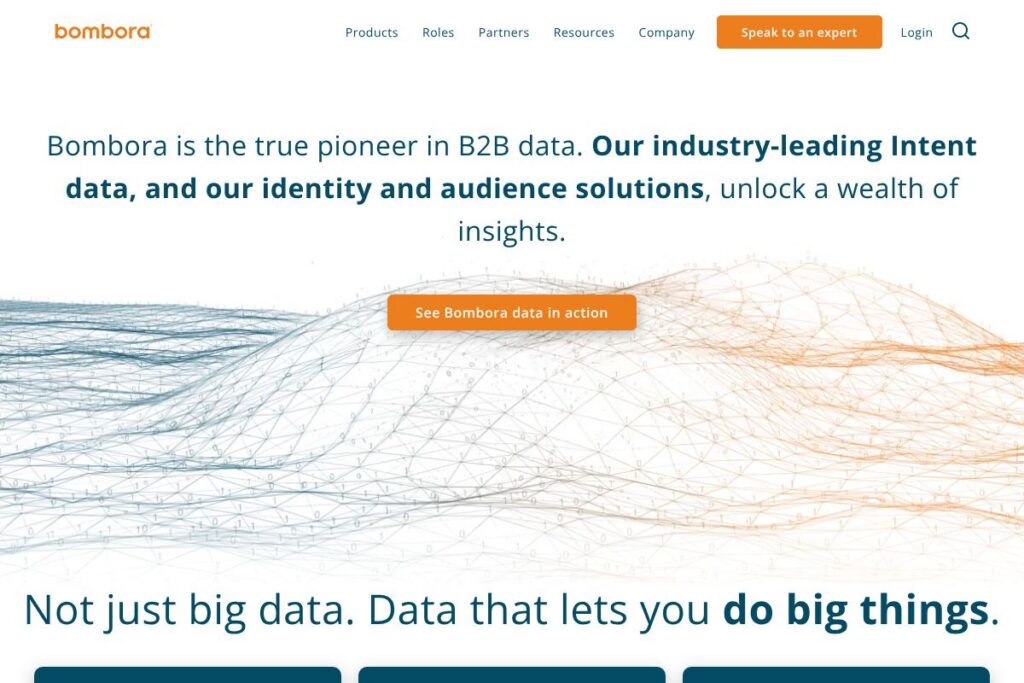
Bombora is a B2B data provider that specializes in intent data, audience solutions, and identity resolution to support marketing, sales, and measurement workflows. The platform aggregates content consumption signals across a large Data Co-op of publishers and brand sites to surface which companies and audiences are researching specific topics.
Compared with ZoomInfo, which emphasizes contact and firmographic enrichment, Bombora is oriented around behavioral signals that indicate buying interest. Compared with 6sense, which combines intent with predictive analytics and account-based orchestration, Bombora is stronger on raw consumption-based intent and large-scale source coverage. Compared with Clearbit, which focuses on enrichment and lead intelligence, Bombora provides topic-level interest data tied to audiences and identity graphs.
Bombora does well at delivering large-scale intent signals and audience segments that feed demand generation, account-based marketing, and attribution. The product is aimed at marketing and revenue operations teams in B2B organizations that need third-party intent, audience targeting, and identity linkage for campaign activation and measurement. For demos and enterprise discussions, organizations can contact the vendor through Bombora’s homepage.
How Bombora Works
Bombora collects anonymized content consumption events from a Data Co-op made up of publishers, brand sites, and premium B2B sources. The platform processes billions of events monthly, infers topic-level intent signals at the company and audience level, and scores those signals so teams can prioritize accounts or audiences showing interest.
Teams typically ingest Bombora outputs into their CRM, marketing automation, or ad platforms. A common workflow is to combine Bombora intent signals with firmographic enrichment, create ABM target lists, run personalized outreach or advertising, and then measure lift using Bombora’s measurement capabilities. Data can be delivered through APIs, feeds, or partner integrations to support activation and analytics.
What does Bombora do?
Bombora’s product set centers on intent measurement, audience creation, and identity resolution. Core capabilities include topic-level intent scoring, curated audience segments, company identity mapping, and measurement tools for campaign lift and reach. The platform emphasizes quality at scale from a large network of B2B sources and provides ways to export or integrate data into downstream systems.
The platform includes several powerful capabilities worth highlighting:
Intent Data
Intent Data provides topic-level interest scores for companies and audiences based on aggregated consumption patterns. Teams use these signals to prioritize accounts, trigger outreach, or fuel programmatic targeting in ad platforms.
Audience Solutions
Audience Solutions deliver prebuilt and custom audience segments for activation in advertising and demand-gen systems. These segments help marketing teams target buyers by intent topics, firmographics, or industry verticals.
Identity Resolution
Identity Resolution maps intent signals to company and contact identity graphs, helping connect anonymous consumption with known accounts or personas. This supports CRM enrichment and more accurate attribution for account-based programs.
Data Co-op
The Data Co-op aggregates data from thousands of publishers and brand sites to generate intent at scale and improve signal coverage across industries. High source exclusivity for many providers increases the distinctiveness of the dataset.
Measurement and Analytics
Measurement and Analytics provide campaign lift and reach reports that compare exposed audiences with baseline groups. Marketers use these reports to quantify the effect of advertising and content programs on intent signals.
Integrations and Delivery
Integrations and Delivery include API endpoints, direct feeds, and connectors to major CRMs, ad platforms, and marketing automation systems to support activation and reporting workflows. The delivery options are designed for both programmatic activation and batch data ingestion.
With these capabilities, Bombora is principally valuable for B2B teams that need reliable intent signals and audience definitions to run targeted campaigns and measure their impact.
Bombora pricing
Bombora uses an enterprise and subscription-based pricing model tailored to customer needs, with most engagements priced based on data volume, number of target accounts, and activation methods. Public, line-item pricing is not displayed in a dedicated pricing page; pricing conversations are handled through sales and custom quotes.
For exact costs, options for data access, and enterprise packages, contact the vendor directly via Bombora’s homepage to request a quote or speak with sales about pricing and licensing terms.
What is Bombora Used For?
Bombora is used for account-based marketing, programmatic audience targeting, sales prioritization, and measurement of marketing impact. Marketers leverage intent signals to identify in-market accounts, refine media buys, and sequence outreach based on observed topic interest.
Revenue operations and analytics teams use Bombora to connect campaign exposure with changes in intent, supporting attribution and spend optimization. Sales teams use intent alerts to prioritize outreach to accounts showing accelerated research activity.
Pros and Cons of Bombora
Pros
- High-quality intent signals: Aggregates billions of consumption events from a large Data Co-op to produce topic-level interest scores that help prioritize accounts and audiences.
- Identity linking: Maps anonymous intent to company and persona identities, making it easier to activate signals in CRMs and marketing systems.
- Measurement capabilities: Offers tools and reports to quantify campaign lift and reach, which helps validate media and messaging strategies.
Cons
- Enterprise focus: Pricing and package structure are oriented to mid-market and enterprise buyers, which can be a barrier for very small teams.
- Integration work: Depending on existing stack complexity, teams may need engineering resources to build connectors or data pipelines for large-scale activation.
- Topic granularity trade-offs: Topic-level intent delivers useful signals but may require careful thresholding and enrichment to avoid false positives in niche verticals.
Does Bombora Offer a Free Trial?
Bombora offers enterprise subscriptions and typically provides demos or trials on a case-by-case basis rather than a public free plan. Prospective customers can request demonstrations, pilot projects, or sample datasets by contacting sales through Bombora’s homepage to explore suitability before committing to a contract.
Bombora API and Integrations
Bombora provides developer access and APIs for delivering intent, audience, and identity data into downstream systems. The API documentation outlines endpoints for pulling intent scores, audience lists, and identity mappings, and explains authentication and delivery formats.
Key integrations commonly used with Bombora include advertising platforms and marketing systems such as Salesforce, Marketo, Google Ads, and major demand-side platforms for activation and reporting. Many customers connect Bombora outputs to CRMs and marketing automation tools to automate targeting and measurement workflows.
10 Bombora alternatives
Paid alternatives to Bombora
- ZoomInfo — A data platform focused on contact and company intelligence, including intent-like signals and robust contact enrichment for sales and marketing teams.
- 6sense — Combines intent signals with predictive analytics and account orchestration to support ABM and pipeline acceleration programs.
- Demandbase — Offers account-based advertising, targeting, and measurement with intent signals and account orchestration capabilities.
- Clearbit — Provides enrichment and lead intelligence to append firmographics and technographic details to leads and accounts.
- Terminus — An ABM platform for account-based advertising, orchestration, and measurement that can consume intent signals for targeting.
- Leadfeeder — Identifies company visitors to your website and provides behavioral signals to sales and marketing teams.
- InsideView — Focuses on market intelligence and data enrichment for go-to-market teams with company and contact insights.
Open source alternatives to Bombora
- OpenCorporates — An open database of company records that can be used for basic firmographic enrichment and linking across jurisdictions.
- Wikidata — A community-maintained knowledge graph that includes company and organization entities for enrichment and research workflows.
- DBpedia — Structured data extracted from Wikipedia that can support entity linking and basic organization metadata for analytics purposes.
Frequently asked questions about Bombora
What is Bombora used for?
Bombora is used to surface B2B intent signals, create audience segments, and link anonymous behavior to company identities. Teams use these outputs for account-based marketing, targeted advertising, and sales prioritization.
Does Bombora provide an API for intent data?
Yes, Bombora provides APIs to deliver intent scores, audience lists, and identity mappings. Developers can integrate those endpoints into CRMs, ad platforms, and analytics systems to automate activation and reporting.
How does Bombora price its services?
Bombora uses enterprise pricing that is customized based on data volume, number of target accounts, and delivery methods. For a tailored quote or package details, contact sales via Bombora’s homepage.
Can Bombora integrate with Salesforce and marketing automation platforms?
Yes, Bombora integrates with major CRMs and marketing automation systems. Common integrations include Salesforce and Marketo for syncing intent signals and audience lists into campaign workflows.
Is Bombora suitable for small businesses?
Bombora is primarily aimed at mid-market and enterprise teams that need scalable intent and audience data. Small businesses can evaluate pilot or sample dataset options by contacting the vendor to discuss fit and scope.
Final verdict: Bombora
Bombora stands out for its scale of B2B consumption signals, its Data Co-op model, and its focus on mapping topic-level intent to audiences and identities. It is particularly useful for marketing and revenue teams that need to surface in-market accounts and measure campaign impact with intent-based metrics.
Compared with ZoomInfo, which is stronger on direct contact enrichment and database-driven outbound, Bombora is more specialized for intent and audience targeting. Both vendors follow enterprise pricing models and require sales engagement for exact quotes, but Bombora typically offers deeper coverage for content consumption signals while ZoomInfo provides richer contact-level data for outbound sales.
For teams focused on ABM, programmatic activation, and campaign measurement using intent signals, Bombora is a core option to evaluate. To explore product demos, pilots, or enterprise pricing, reach out through Bombora’s homepage.