What is Eventbrite
Eventbrite is a platform for discovering, promoting, and selling tickets to events of all sizes. It provides event listing and discovery for attendees while giving organizers tools to create event pages, sell tickets, manage registrations, and track attendance across in-person and virtual formats.
Compared with Ticketmaster, Eventbrite emphasizes self-service event creation for small to mid-size organizers rather than large-venue, exclusively contracted ticketing. Compared with Meetup, Eventbrite focuses more on paid ticketing, analytics, and promotional tools rather than recurring group meetups. Compared with Cvent, Eventbrite is typically easier to set up for single events and local activities, while Cvent targets enterprise-level conferences with deeper customization and sourcing options.
All of this makes Eventbrite particularly well suited to community organizers, independent promoters, instructors, non-profits, and small event teams that need a fast way to publish events, sell tickets, and reach local audiences.
How Eventbrite Works
Organizers create an event page with details, ticket types, pricing, and registration forms, then publish that page to Eventbrite’s searchable marketplace and distribution channels. The platform handles ticket transactions, issues e-tickets, and provides attendee lists and reporting tools that organizers can download or view in the web app.
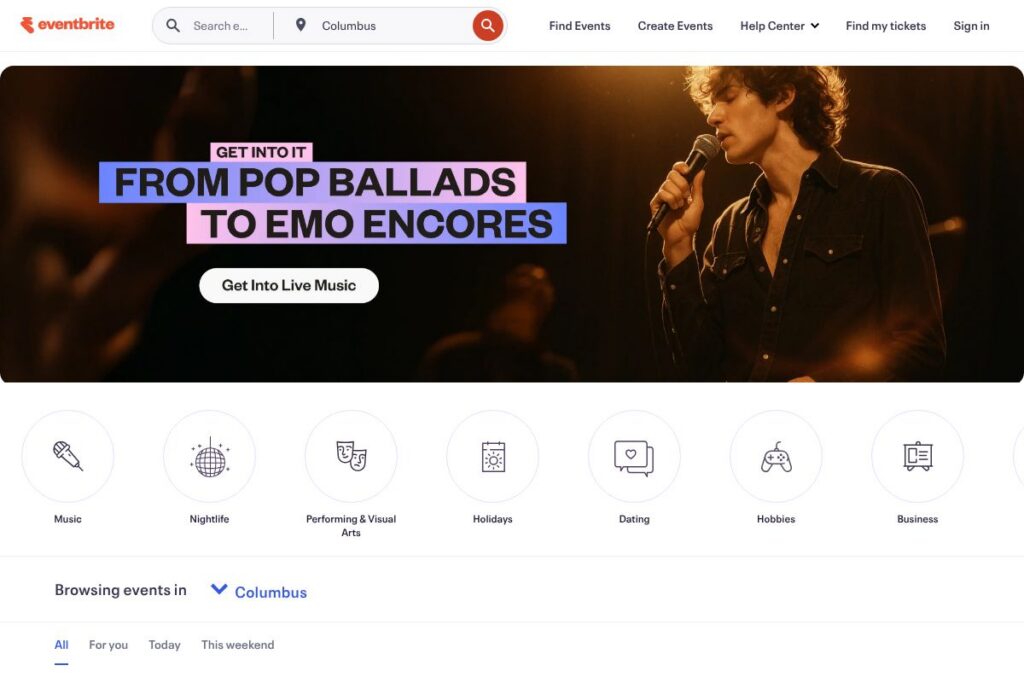
On the attendee side, people can browse by category, city, date, and popularity, register or buy tickets, and add events to calendars. For in-person events, organizers can use Eventbrite’s mobile apps for check-in and ticket scanning; for virtual events, Eventbrite integrates with webinar providers and embeds access links into confirmation emails.
What does Eventbrite do?
Eventbrite’s core capabilities center on event creation, ticketing, attendee management, promotion, and analytics. The platform supports free and paid events, multiple ticket tiers, discount codes, refunds management, and event discovery across categories like music, nightlife, arts, business, and food.
Let’s talk Eventbrite’s Features
Event Listing and Discovery
Event pages include searchable metadata, categories, images, and location or online meeting details, which help attendees find events by city or interest. Eventbrite curates lists and destination pages to surface popular events and local highlights, improving discoverability for organizers.
Ticketing and Registration
The ticketing system supports multiple ticket types, quantity limits, timed sales, reserved seating for configured venues, and promo codes. Organizers get a transactional checkout flow, automated confirmation emails, and the ability to collect custom registration questions.
Promotion and Marketing Tools
Built-in promotional features include email invitations, discount codes, and referral tools, plus the option to promote listings through Eventbrite’s discovery channels. Organizers can integrate with advertising and social platforms to extend reach and track conversion.
Attendee Management and Check-in
Eventbrite provides attendee lists, guest check-in via mobile apps, barcode scanning, and on-site badge printing through partner tools. These features simplify front-door operations and reduce manual entry at events.
Virtual Event Support
The platform supports virtual events through integrations with webinar and streaming providers; organizers can attach access links to tickets and send automated instructions to attendees. Virtual features include password-protected event access and attendee engagement tracking.
Analytics and Reporting
Organizers receive dashboards showing ticket sales, revenue, attendee demographics, and traffic sources, with exportable reports for accounting and post-event analysis. These insights help refine pricing, promotion channels, and program scheduling for future events.
Integrations and Developer Tools
Eventbrite connects with marketing, CRM, and payment systems to automate workflows and sync attendee data. Developers can extend functionality and build custom integrations via Eventbrite’s developer platform.
With Eventbrite you get an end-to-end event lifecycle tool: create an event, sell tickets, manage attendees, and analyze outcomes, all in one place.
Eventbrite pricing
Eventbrite uses a fee-based model for ticketed events and offers a free option for events that do not charge attendees. Pricing varies by ticket type, region, payment method, and whether the organizer absorbs fees or passes them to buyers; for the most up-to-date fee schedules and organizer plan options, visit the Eventbrite homepage for current pricing details and policies.
What is Eventbrite Used For?
Eventbrite is commonly used to run ticketed and free local events such as concerts, workshops, food festivals, classes, and community gatherings. Organizers use it to handle online ticket sales, registration forms, and attendee communications without building a custom checkout system.
It’s also used for corporate and nonprofit events, small conferences, fundraising activities, and virtual webinars, where quick setup, attendee tracking, and payment processing are needed. Event promoters and venue managers rely on the platform to distribute tickets across regional discovery pages and to reach audiences in top destination cities.
Pros and Cons of Eventbrite
Pros
- Easy event setup: Event pages and ticket types can be created quickly through an intuitive web interface, letting organizers publish events in minutes.
- Broad discovery reach: The marketplace and destination pages increase visibility for local events and help drive organic ticket sales.
- Integrated ticketing and check-in: Built-in checkout, e-tickets, mobile scanning, and attendee lists reduce the need for third-party systems.
- Developer platform and integrations: Connections to CRMs, email marketing, payment processors, and webinar tools streamline workflows for organizers.
Cons
- Per-ticket fees: Eventbrite applies fees per ticket and/or a percentage of the sale which can add up for higher-volume events or low-margin organizers.
- Seller fee control: Organizers must choose whether to absorb fees or pass them to attendees, which can affect ticket pricing and conversion.
- Advanced enterprise features limited: Large-scale conference features and venue contract management are less comprehensive than specialist enterprise systems.
Does Eventbrite Offer a Free Trial?
Eventbrite offers a free plan for free events and paid options for ticketed events. If you host a free event you can use the core event creation and listing features without platform fees; for paid events, transaction fees apply and additional organizer services may incur charges. Check the Eventbrite Help Center for guidance on fees, payouts, and organizer billing.
Eventbrite API and Integrations
Eventbrite provides an API and developer resources to automate event creation, retrieve attendee lists, and sync ticketing data with external systems; see Eventbrite’s developer platform for API documentation and authentication details. The platform also supports integrations with marketing and CRM tools, payment gateways, and webinar providers via the Eventbrite integrations catalog.
10 Eventbrite alternatives
Paid alternatives to Eventbrite
- Ticketmaster — Large-venue and high-capacity ticketing with venue partnerships and enterprise sales channels.
- Meetup — Community meetups and recurring groups, focused on member engagement and RSVPs more than paid ticketing.
- Cvent — Enterprise event management with sourcing, venue selection, and advanced conference features for large organizations.
- Bizzabo — Event experience platform for hybrid events with attendee engagement and sponsorship tools.
- Splash — Event marketing platform focused on branded event pages, RSVPs, and guest experience management.
- Eventzilla — Online registration and ticketing for small to mid-size events with a simpler fee structure.
- Ticket Tailor — Low-fee ticketing service aimed at small organizers and volunteers, with flat-fee options.
Open source alternatives to Eventbrite
- pretix — Open-source ticketing system that can be self-hosted, offering customization and local payment integrations.
- Attendize — Self-hosted event ticketing application built on PHP with attendee management and reporting features.
- OpenConferenceWare — Community-driven conference and event scheduling platform, useful for technical meetups and conferences.
Frequently asked questions about Eventbrite
What types of events can I host on Eventbrite?
You can host everything from free community meetups to paid concerts, classes, conferences, and virtual webinars on Eventbrite. The platform supports in-person and online event formats with ticketing, registration, and attendee management features.
Does Eventbrite charge organizers fees for ticketed events?
Yes, Eventbrite typically charges per-ticket and/or percentage-based fees on paid events. Fee specifics depend on region, payment method, and whether the organizer or attendee covers the fees; consult Eventbrite’s support resources for details at the Eventbrite Help Center.
Can I use Eventbrite for virtual events?
Yes, Eventbrite supports virtual events and integrates with webinar and streaming providers. You can attach access links to tickets, send automated attendee emails, and track virtual attendance through integrated tools.
Does Eventbrite offer an API for developers?
Yes, Eventbrite provides a public API for event creation, attendee management, and reporting. Review the Eventbrite developer platform for API endpoints, authentication, and integration guides.
Can I manage on-site check-in with Eventbrite?
Yes, Eventbrite includes mobile apps and barcode scanning for on-site check-in. These tools speed up entry, reduce manual data entry, and integrate with attendee lists and ticket validation.
Final verdict: Eventbrite
Eventbrite is a practical, widely used platform for organizers who need fast setup, discovery, and integrated ticketing for local and virtual events. Its strengths are usability, marketplace visibility, and a comprehensive set of organizer tools that cover ticket sales, check-in, and reporting.
Compared to Ticketmaster, Eventbrite is more accessible for small and mid-size organizers and offers easier self-service publishing; Ticketmaster tends to work with large venues and often involves different contractual and fee structures. For organizers who want a ready-to-use ticketing and discovery platform without enterprise-level procurement, Eventbrite is a strong choice.