Lightspeed Restaurant (U-Series): An Overview
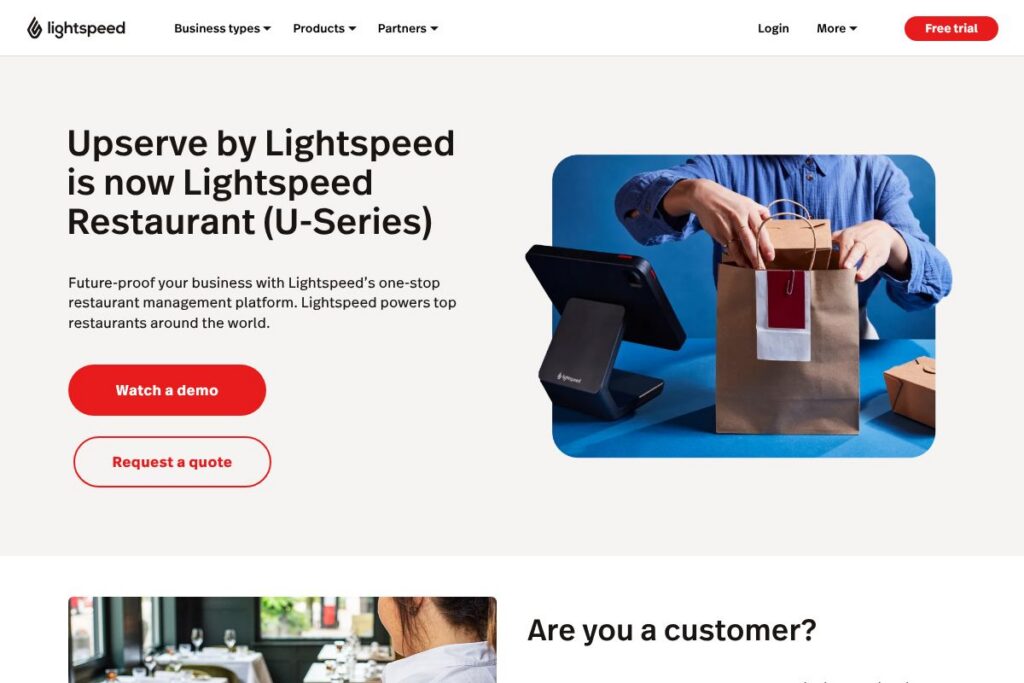
Lightspeed Restaurant (U-Series) is the Upserve POS product rebranded after Upserve joined the Lightspeed family. It provides an integrated suite for front-of-house operations, back-of-house inventory and menu controls, guest analytics, and payments processing so restaurant teams can run service, manage inventory, and review performance from the same platform.
Compared to competitors, Lightspeed Restaurant (U-Series) lands between turnkey systems like Square for Restaurants, which prioritizes simplicity and transparent pricing, and enterprise platforms like Toast, which emphasize large-scale restaurant feature sets and payments integration. It also overlaps with TouchBistro on tableside ordering and hardware flexibility while offering tighter integration with Lightspeed’s broader commerce ecosystem.
All of this makes Lightspeed Restaurant (U-Series) a strong choice for restaurants that want a single vendor for POS software, hardware options, and payment routing. It is particularly well suited to multi-location independent restaurants and small chains that need tableside ordering, inventory controls, and 24/7 support.
How Lightspeed Restaurant (U-Series) Works
The system runs from cloud-hosted services that synchronize sales, inventory, and guest data across terminals and mobile devices in real time. Restaurants use a combination of fixed terminals and handheld devices for order entry, while the cloud backend manages menu configurations, reporting, and integrations.
During service, staff ring orders on terminals or handhelds, send tickets to kitchen printers or kitchen display systems, and accept payments through integrated processing. Offline mode allows continued operation if internet connectivity is interrupted, with transactions syncing back to the cloud when connection is restored.
Implementation normally involves selecting hardware, configuring menus and modifiers, training staff on order flows and payouts, and connecting integrations for accounting, online ordering, and reservations. Lightspeed offers 24/7 support and a hardware store for terminals and handhelds to simplify deployment and replacement parts.
Lightspeed Restaurant (U-Series) features
Lightspeed Restaurant (U-Series) groups core restaurant functions into a single platform for order capture, payments, inventory, reporting, and guest management. Recent upgrades emphasize mobile ordering, cloud synchronization, and deeper integration with Lightspeed’s commerce tools.
Key functionality includes:
POS Terminals and User Interface
The POS interface is optimized for quick ticket entry, modifier handling, and split checks across multiple terminals. Its layout is configurable so teams can surface frequently used menu items and speed up service during peak periods.
Tableside Ordering and Handhelds
Handheld devices allow tableside ordering and payments, reducing turnaround time and improving order accuracy. Handhelds sync to the same cloud account as fixed terminals so all sales and inventory changes are consolidated instantly.
Order and Kitchen Management
Order routing supports kitchen printers, kitchen display systems, and course timing to manage plating and pacing. Staff can send voids, comp items, and seat-specific orders while the back of house sees clear ticket information to reduce mistakes.
Inventory and Menu Controls
Menu management ties directly into inventory tracking so sales decrement stock levels and flag low items. You can manage modifiers, pricing by location, timed menus, and ingredient-level usage to help control costs and reduce waste.
Reporting and Guest Analytics
Built-in reports cover sales, labor, menu performance, and item-level profitability to guide purchasing and menu decisions. Guest profiles capture order history and preferences to support loyalty, targeted promotions, and service personalization.
Payments and Processing
Integrated payments support EMV chip, contactless, and keyed transactions, with consolidated reporting for settlements and refunds. The platform is registered as an Independent Sales Organization for payment routing and can work with Lightspeed’s payment processing offerings.
Hardware and Peripherals
Lightspeed’s hardware store supplies terminals, handhelds, receipt printers, and cash drawers compatible with U-Series software. Hardware bundles and replacements simplify upgrades and standardize deployments across multiple locations.
With these features combined, the biggest benefit is a single system that handles order capture through settlement while maintaining data continuity across devices and locations, which reduces reconciliation work and centralizes operations.
Lightspeed Restaurant (U-Series) pricing
Lightspeed Restaurant (U-Series) uses subscription pricing with options for bundled hardware and enterprise agreements; pricing is tailored to restaurant size, hardware needs, and selected modules. Because quotes frequently depend on terminal counts, add-on services, and payment processing, Lightspeed typically provides custom pricing rather than a single public rate.
For current plan comparisons, hardware bundles, and to request a tailored quote, see Lightspeed Restaurant plans on the Lightspeed Restaurant page. For specific questions about account-level pricing or merchant processing, contact Lightspeed sales or support via the help.upserve.com chat.
What is Lightspeed Restaurant (U-Series) Used For?
Lightspeed Restaurant (U-Series) is used to run day-to-day front-of-house and back-of-house operations, including order entry, tableside payments, kitchen coordination, and check management. Restaurants use it to centralize menu changes, manage ingredients, and synchronize sales across multiple terminals and locations.
The platform is also used for reporting and guest analytics, letting owners understand labor costs, best-selling items, and repeat customer behavior. Integrations with online ordering, reservations, accounting, and loyalty providers extend the POS into a broader restaurant tech stack.
Pros and Cons of Lightspeed Restaurant (U-Series)
Pros
- Integrated hardware and software ecosystem: Combining POS software with a dedicated hardware store makes procurement and compatibility simpler for multi-location restaurants, and support teams can address hardware and software issues together.
- Comprehensive restaurant features: The platform includes tableside ordering, inventory controls, kitchen routing, and guest analytics, which reduces the need for multiple disparate tools in a single location.
- 24/7 support availability: Round-the-clock support and a dedicated help channel provide operational continuity for restaurants that run outside standard business hours.
Cons
- Custom pricing for larger deployments: Because pricing is often quoted per account and depends on hardware and processing needs, small operators may need to contact sales for a clear cost comparison with competitors offering public plans.
- Potential migration effort: Restaurants moving from another POS will need to plan data migration for menus, historical sales, and loyalty records, which can require professional services for larger groups.
Does Lightspeed Restaurant (U-Series) Offer a Free Trial?
Lightspeed Restaurant (U-Series) typically provides a free trial or demo for prospective customers. Restaurants can request a trial or live demo to validate hardware, workflows, and integrations before committing; contact the sales team through the main Lightspeed Restaurant page or start a conversation using the help.upserve.com chat.
Lightspeed Restaurant (U-Series) API and Integrations
Lightspeed provides developer resources and APIs that allow integrations for online ordering platforms, accounting software, reservation systems, and analytics tools. The Lightspeed API documentation covers endpoints for orders, items, customers, and inventory for developers building custom integrations.
For a curated list of prebuilt connections with ordering, payment, and back-office vendors, see the Lightspeed Restaurant integrations page which lists compatible partners and integration types.
10 Lightspeed Restaurant (U-Series) alternatives
Paid alternatives to Lightspeed Restaurant (U-Series)
- Toast: A restaurant-focused POS with integrated payments, online ordering, payroll, and hardware bundles popular with medium and large restaurants.
- Square for Restaurants: A flexible POS with simple pricing, strong online ordering and payment features, and lightweight hardware options for smaller venues.
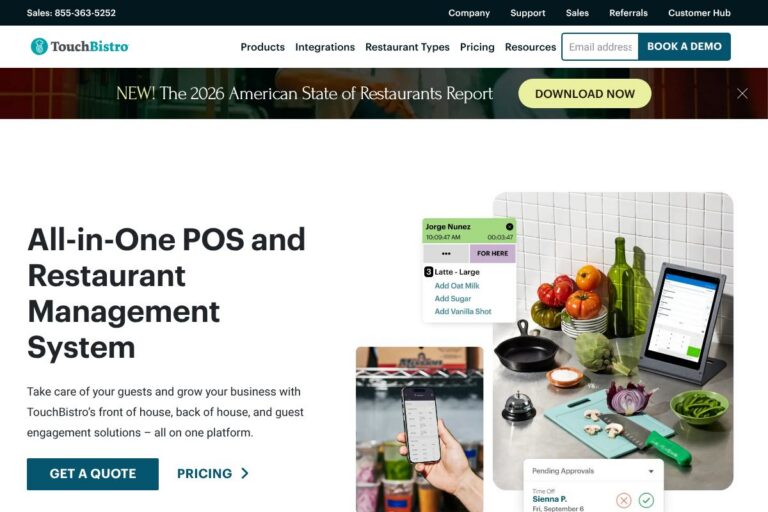
- TouchBistro: An iPad-first restaurant POS with robust tableside ordering, menu engineering tools, and offline operation for standalone restaurants.
- Revel Systems: A full-featured POS with strong enterprise features, multi-location management, and detailed reporting for larger restaurant groups.
- Clover: A modular POS and payments platform with many third-party apps and hardware options suitable for quick-service and small full-service operations.
Open source alternatives to Lightspeed Restaurant (U-Series)
- Floreant POS: An open source restaurant POS that supports order entry, kitchen printing, and basic inventory; suitable for restaurants that want a self-hosted, no-license-cost option.
- uniCenta: A community-driven POS forked from other open systems, allowing self-hosting and broad hardware compatibility for independent operators.
- Odoo (Community) POS: The open source edition of Odoo includes a POS module that can be extended within Odoo’s broader ERP suite, useful for restaurants that want integrated accounting and inventory without vendor lock-in.
Frequently asked questions about Lightspeed Restaurant (U-Series)
What is Lightspeed Restaurant (U-Series) used for?
Lightspeed Restaurant (U-Series) is used to manage point of sale operations, tableside ordering, inventory, and reporting for restaurants. Operators use it to take orders, process payments, run kitchens, and analyze sales performance across locations.
Does Lightspeed Restaurant (U-Series) keep Upserve integrations working?
Yes, former Upserve integrations remain operational under Lightspeed Restaurant. The integrations list is available on the Lightspeed Restaurant integrations page for reference.
How can I contact Lightspeed for support or sales about Lightspeed Restaurant (U-Series)?
You can reach support via the help.upserve.com chat or contact sales through the Lightspeed Restaurant site. The support channel is staffed 24/7 for operational assistance and hardware questions.
Can Lightspeed Restaurant (U-Series) process payments and handle EMV transactions?
Yes, Lightspeed Restaurant (U-Series) supports integrated payments including EMV and contactless transactions. Payment processing is routed through Lightspeed’s merchant services setup and can be configured with the POS for consolidated reporting.
Is Lightspeed Restaurant (U-Series) suitable for multi-location restaurants?
Yes, it is designed to scale to multi-location operations with centralized menu management and cross-location reporting. Larger deployments often use enterprise agreements and hardware standardization to streamline operations.
Final verdict: Lightspeed Restaurant (U-Series)
Lightspeed Restaurant (U-Series) combines the former Upserve POS strengths in guest analytics and restaurant workflows with Lightspeed’s broader commerce and hardware ecosystem, making it a solid option for operators who want integrated hardware, payments, and a unified backend. The platform does well at consolidating front-of-house ordering, inventory management, and reporting into a single operational stack backed by 24/7 support.
Compared to Toast, Lightspeed Restaurant (U-Series) offers similarly deep restaurant features but is positioned within Lightspeed’s wider commerce offerings, which can be useful if you plan to expand into retail or ecommerce. Pricing tends to be quoted individually for both platforms; evaluate total cost by counting terminals, payment processing fees, and any add-on services before deciding between the two.
Overall, Lightspeed Restaurant (U-Series) is a practical choice for independent restaurants and small chains that need flexible hardware choices, integrated payments, and centralized operations, especially if you value vendor continuity across hardware and software.