SevenRooms: An Overview
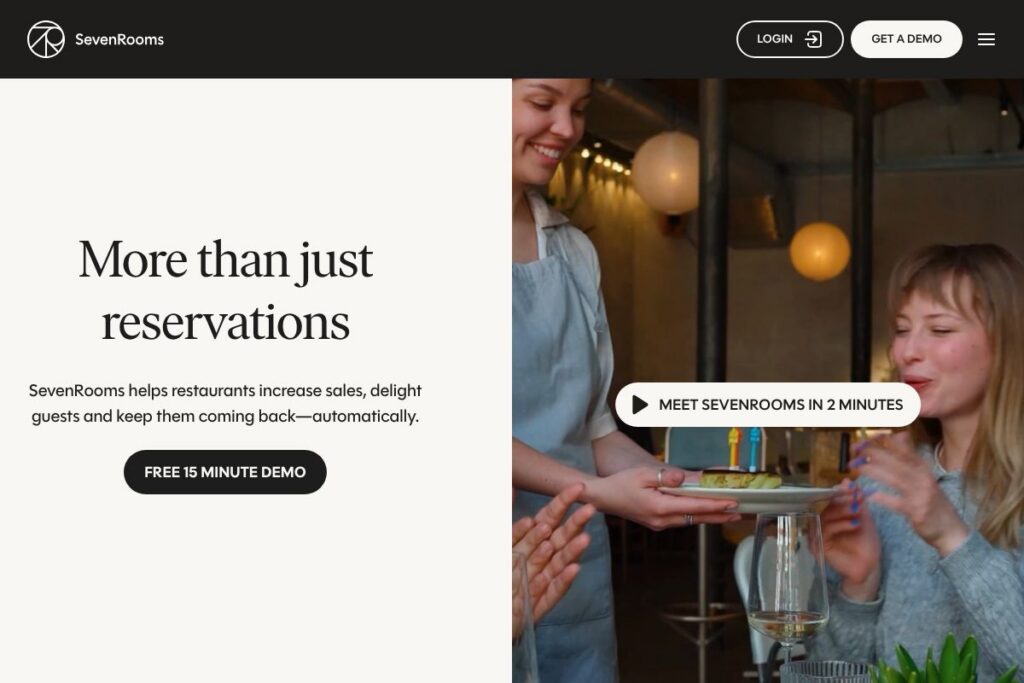
SevenRooms is a combined reservations, guest management, and marketing platform built for restaurants, nightlife, and entertainment venues. It centralizes guest profiles, reservations, seating, waitlists, and automated campaigns so teams can deliver consistent, personalized service across venues and channels.
Compared with OpenTable, which is primarily focused on discovery and reservation distribution, SevenRooms places more emphasis on first-party guest data and marketing automation that helps venues own the guest relationship. Against Resy, SevenRooms expands beyond reservations into automated CRM workflows and event ticketing, and when compared to POS-centric platforms like Toast, it provides deeper guest-profiling and communications rather than payment processing and onsite order management.
All of this makes SevenRooms particularly well suited to independent restaurants, multi-unit groups, and nightlife operators that want to reduce third-party commission dependency, create repeat business with targeted campaigns, and use guest-level analytics to improve operations and revenue.
How SevenRooms Works
SevenRooms captures guest interactions from online bookings, walk-ins, and events, and consolidates that data into persistent guest profiles. These profiles store contact details, visit history, preferences, and notes, and they are available across venues in a single database so staff can recognize and personalize service for returning guests.
Front-of-house teams use the platform to manage reservations, automated waitlists, seating, and turns, while back-of-house and operations teams use reporting to optimize covers and staffing. Marketing teams create automated email and SMS campaigns that target segments built from the guest database, with performance tracked through built-in analytics.
Technical integrations and an API let properties connect SevenRooms to payment systems, POS, and ticketing platforms so guest data flows to and from other operational systems. Implementation typically involves onboarding, POS connectors, and configuring booking rules, auto-seating, and campaign templates to match venue workflows.
What does SevenRooms do?
SevenRooms organizes guest-facing operations and marketing around a single guest database and a set of automation tools. Core capabilities include an automated CRM, reservation and seating management, marketing automation, integrations to POS and booking channels, and reporting focused on covers and revenue.
Key functionality includes:
Guest Profiles and CRM
Guest profiles are created automatically from bookings and events, aggregating contact information, visit history, preferences, and notes. Profiles are searchable and available across venues, which helps staff personalize service, recover guests after negative experiences, and power targeted marketing segments.
Reservation Management and Auto-Seating
The reservation module handles online bookings, phone reservations, waitlist management, and automated seating to maximize table turns. Auto-seating uses configured rules to assign covers efficiently, reducing manual seat chart adjustments during high-volume periods.
Marketing Automation
SevenRooms enables automated email and SMS campaigns based on behavior and segmentation, such as birthday offers, no-show recovery, and re-engagement sequences. Campaigns can be scheduled and tracked, converting guest relationships into recurring revenue with minimal manual work.
Events and Ticketing
The platform supports paid and RSVP-style events, letting venues capture attendee details, sell tickets, and manage guest lists from the same CRM. Event integrations help ensure attendee data is added to guest profiles for follow-up marketing.
Integrations and API
SevenRooms integrates with POS systems, payment processors, channel partners, and loyalty providers to keep guest and transaction data in sync. The platform offers an API and documented endpoints for custom integrations and data exports to analytics or reporting tools.
Reporting and Analytics
Built-in reporting surfaces covers, revenue by channel, campaign performance, and guest acquisition metrics. These reports help operators measure the ROI of marketing efforts, identify high-value guests, and refine operational decisions like staffing and inventory.
Feedback and Guest Recovery
Feedback collection and automated recovery workflows allow teams to capture post-service opinions and follow up with dissatisfied guests. This closes the loop on service issues and helps preserve guest relationships before they become churn.
With these capabilities, the biggest benefit is a system that turns booking and visit data into actionable CRM workflows; teams get a single source of truth for guest engagement that also supports marketing and operational efficiency.
SevenRooms pricing
SevenRooms offers flexible, enterprise-oriented pricing tailored to hospitality businesses of different sizes, with custom quotes typically provided through sales. Public, fixed-rate plans are not published on a dedicated pricing page, and offerings often vary by venue size, feature set, and integration needs.
For details on what is included in each package and to request a demo or pricing estimate, visit the SevenRooms homepage for pricing and plans. Sales teams can provide custom proposals that cover multi-venue deployments, integrations, and support options.
What is SevenRooms Used For?
SevenRooms is used to centralize guest data, manage reservations and waitlists, and automate marketing for restaurants, hotel restaurants, bars, and nightlife venues. Teams rely on it to reduce dependency on third-party booking channels, capture first-party guest contacts, and build repeat business through personalized outreach.
Operational use cases include optimizing table turns with auto-seating, coordinating multi-venue operations with shared guest profiles, and running ticketed events while keeping attendee information in the CRM. Marketing use cases focus on segmented campaigns, retention offers, and post-visit follow-ups that increase lifetime guest value.
Pros and Cons of SevenRooms
Pros
- First-party data focus: Consolidates guest contact and visit history into a single CRM, which lets venues own relationships and reduce commission-based bookings. This also enables precise segmentation for targeted marketing and loyalty-building campaigns.
- Comprehensive front-of-house tools: Reservations, waitlists, seating charts, and auto-seating reduce manual workload during peak periods and help increase covers per service. The platform is optimized for high-volume environments where efficient turns matter.
- Marketing automation tied to operations: Automated email and SMS programs use the same guest data that operations generate, so campaigns are timely, personalized, and measurable. This drives repeat visits without heavy manual effort.
- Integration ecosystem: Connects to POS systems, payment gateways, and third-party booking channels through native integrations and an API, enabling data flow across the tech stack and preserving guest context.
Cons
- Custom pricing and sales-led procurement: Pricing is typically custom and negotiated, which can lengthen evaluation cycles for smaller independents that prefer transparent self-serve plans. Organizations may need to engage sales to see full feature access and pricing.
- Feature breadth can require setup time: The platform’s wide functionality and integration options mean onboarding and configuration can be more involved than single-purpose reservation tools. Proper configuration is important to realize automation and reporting benefits.
Does SevenRooms Offer a Free Trial?
SevenRooms offers paid plans and arranges demos rather than a public long-term free plan. Prospective customers can request a demo and a sales-run trial or pilot that demonstrates platform capabilities in a venue’s environment, with access to campaign tools, seating, and CRM features during the pilot period.
SevenRooms API and Integrations
SevenRooms provides developer resources and integration options so venues can connect POS systems, payment processors, and other operational tools. The SevenRooms integrations hub lists common connectors for POS, loyalty, and reservation channels.
For custom integrations and automation, consult the SevenRooms developer documentation which provides API endpoints for guest profiles, reservations, events, and webhooks to keep systems synchronized.
10 SevenRooms alternatives
Paid alternatives to SevenRooms
- OpenTable — A reservation and diner discovery platform with a large restaurant network and distribution channels for inbound reservations. Often chosen for exposure to diners and integrated marketing services.
- Resy — Reservation management with guest tools and distribution, geared toward curated dining experiences and reservation control for restaurants. Resy includes waitlist and guest messaging features.
- Toast — A POS and restaurant management platform that covers payments, orders, and basic guest management, focused on in-person operations and integrated payments. Suitable when POS-first capabilities are primary.
- Tock — Ticketed dining and reservation platform that supports prepaid events and experiences, commonly used for special dinners and limited-seating events with built-in ticketing flows.
- Yelp Reservations — Reservation and table management tied to Yelp’s consumer platform, useful for venues that rely on local discovery and review-driven bookings.
- TouchBistro — iPad-based POS with restaurant management features, including reservations plugins and integrations for guest data when combined with CRM partners.
- Upserve — Restaurant management suite that blends POS, analytics, and guest management features to help operators track revenue and guest behavior across services.
Open source alternatives to SevenRooms
- Odoo (Community Edition) — A modular open source ERP with CRM, events, and point-of-sale modules that can be adapted for restaurants, though it requires configuration and hosting. Useful for teams that want control over customization.
- Floreant POS — Open source point-of-sale software used by restaurants, suitable for basic order and table management when paired with external CRM solutions. It is self-hosted and community-supported.
- Unicenta — A POS platform forked from Openbravo, offering table management and sales reporting for restaurants. It requires self-hosting and custom integrations to replicate CRM features.
- Chromis POS — Lightweight, open source POS with basic table and order management that can be extended with custom modules or paired with third-party CRM systems.
Frequently asked questions about SevenRooms
What is SevenRooms used for?
SevenRooms is used to manage reservations, build guest profiles, and run automated marketing for restaurants and nightlife venues. Operators use it to centralize guest data, optimize seating, and convert first-time diners into repeat customers.
Does SevenRooms integrate with my POS?
Yes, SevenRooms supports integrations with many POS systems and payment processors. The SevenRooms integrations hub lists common connectors and integration partners for syncing guest and transaction data.
Can SevenRooms handle multi-venue operations?
Yes, SevenRooms is designed for single locations and multi-venue groups. It provides shared guest profiles, cross-venue reporting, and centralized account controls suited to restaurant groups and hospitality brands.
Is SevenRooms suitable for ticketed events?
Yes, SevenRooms supports ticketed and RSVP-style events with attendee capture. Event attendees are added to the CRM for follow-up marketing and reporting on event performance.
How does SevenRooms handle guest data privacy?
SevenRooms includes controls for managing guest data, consent, and communications. Operators can configure opt-ins and compliance workflows, and integrations typically respect data transfer practices between systems.
Final verdict: SevenRooms
SevenRooms stands out as a guest-first platform that combines reservations, CRM, marketing automation, and operational tools into a single product tailored for hospitality. It excels at helping venues own first-party guest data, automate personalized communications, and optimize seating and turns, which collectively drive repeat visits and revenue.
Compared with OpenTable, SevenRooms focuses more on CRM and direct marketing while OpenTable emphasizes diner distribution and discovery. Pricing models differ as well; OpenTable often includes per-cover or distribution fees alongside subscription elements, whereas SevenRooms typically provides custom, sales-led pricing that emphasizes long-term guest ownership and integrations. For operators prioritizing guest relationships and automated campaigns over pure discovery, SevenRooms is a strong fit, while venues that need maximum visibility on an aggregated reservation marketplace may still consider OpenTable alongside it.