What is StubHub?
StubHub is a secondary ticket marketplace that connects buyers and sellers of sports, concert, theater, and Broadway tickets. The platform aggregates listings from individual sellers and professional resellers, shows real-time seat maps and delivery options, and provides a buyer-protection guarantee to cover issues like canceled events or invalid tickets.
Compared with competitors, StubHub emphasizes a very broad resale inventory and consumer-facing protections. Ticketmaster focuses on primary ticketing and official resale through its own platform, SeatGeek emphasizes aggregated listings with a deal score and strong search/filter tools, and Vivid Seats competes on promotional offers and customer service responsiveness. Each platform approaches fees, guarantees, and discovery features differently, with StubHub being notable for its long-standing marketplace scale and mobile experience.
All of this makes StubHub useful for buyers who need last-minute or hard-to-find seats and for casual or professional sellers who need an established channel to reach event-specific demand. It is particularly well suited to fans who want access to many events across genres, and to sellers who want a familiar marketplace with integrated delivery and seller tools.
How StubHub Works
Users search for events by team, artist, venue, or date, then browse available listings that include seat location, delivery method, and seller ratings. Listings show the ticket price plus any additional fees; buyers select a ticket, complete checkout, and receive the ticket via electronic delivery, mobile transfer, or will-call depending on the event and seller.
Sellers create an account, list tickets with seat details and prices, and choose delivery methods. Once a sale completes, StubHub handles payment processing and the platform’s protection program helps resolve issues between buyers and sellers. For discovery, you can connect music preferences to surface concerts from artists you listen to and use the mobile app to filter by seat map and price range.
What StubHub Brings to the Table
StubHub’s core capabilities center on marketplace listings, buyer protection, mobile seat maps, seller tools, and discovery features like artist syncing. The platform has evolved its mobile apps and search tools to help buyers compare seats, delivery methods, and final cost across many listings.
Ticket marketplace and listings
Listings include seat location, section/row/seat numbers when available, delivery method, and a seller-provided price. Buyers can sort and filter by price, distance from stage, and delivery type to compare multiple sellers for the same event.
FanProtect Guarantee
StubHub provides a buyer-protection program that covers valid entry or comparable replacement tickets if listed tickets are invalid, and offers refunds when events are canceled and not rescheduled. That guarantee is a key safeguard for buyers purchasing from third-party sellers on the secondary market; see the FanProtect Guarantee for details.
Mobile apps and interactive seat maps
Mobile apps include interactive seat maps, price filtering, and mobile delivery options that make buying on a phone straightforward for last-minute purchases. Push notifications can alert you when ticket prices change or when new listings appear for your saved events.
Event discovery with Spotify and preferences
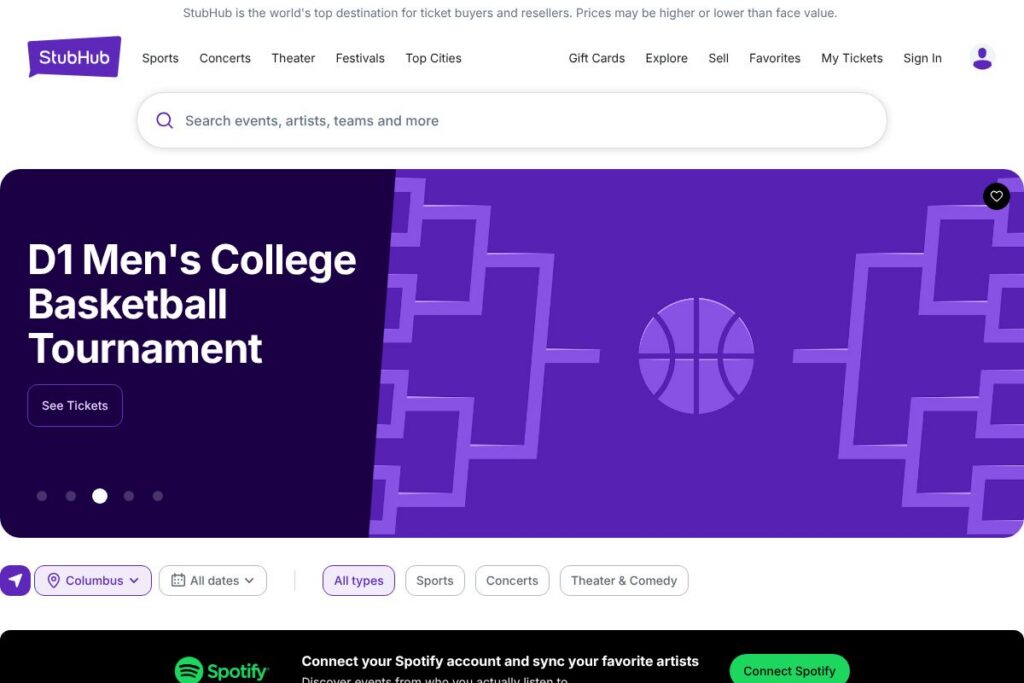
StubHub supports linking music preferences so concert discovery surfaces artists you actually listen to, helping reduce noise when browsing large event catalogs. Connecting accounts and syncing tastes makes it easier to find relevant concerts and similar artists without manual searches.
Seller tools and dashboards
Sellers get listing management tools, pricing guidance, and delivery options to manage inventory across events. The seller dashboard helps track active listings, pending sales, and payouts, and it supports bulk listing workflows for frequent sellers.
Delivery and ticket transfer options
The platform supports several fulfillment methods including electronic delivery, mobile transfer, will-call pickup, and courier shipping for physical tickets. Delivery choices depend on the event and the seller, and the checkout flow shows estimated arrival or transfer timing before purchase.
With these features combined, StubHub focuses on making it possible to find and buy tickets quickly across many event types while providing protections and mobile-first tools that help both buyers and sellers manage transactions.
StubHub pricing
StubHub uses a fee-based pricing model where the listed ticket price is supplemented by buyer fees and, for sellers, service or commission fees that vary by event, delivery method, and region; those fees change frequently and depend on the specific listing. For the most accurate, event-specific fee breakdown and seller payout details, check StubHub’s homepage before purchasing or listing tickets.
What is StubHub Used For?
StubHub is commonly used to buy last-minute or sold-out tickets to sports, concerts, and theater events, and to resell tickets when plans change. Fans use it to compare available seats across sellers and to secure entry for hard-to-find shows or peak sporting events.
It is also used by part-time and professional sellers to reach a large audience without building their own storefront, and by event-goers who prefer mobile ticket delivery and seat-map visualization when choosing where to sit.
Pros and Cons of StubHub
Pros
- Large inventory: The platform lists tickets across many events and venues, increasing the chance of finding hard-to-get seats. Sellers and resellers add listings that expand options beyond primary-market availability.
- Buyer protection: The FanProtect Guarantee provides a clear remediation path for invalid tickets or canceled events. This reduces risk for buyers who buy from third-party sellers.
- Mobile-first discovery: Mobile apps and interactive seat maps speed up last-minute purchasing and make seat selection visual and practical. Notifications and saved searches help track price changes.
- Seller tools: Dashboards and bulk listing capabilities help frequent sellers manage inventory and payouts efficiently.
Cons
- Fees can be substantial: Buyer and seller fees are added on top of listed prices and vary by event, which can significantly raise the final cost. Transparent fee estimates are shown at checkout but can still surprise some users.
- Price variability: Because this is a secondary market, prices can be much higher or lower than face value depending on demand and timing. That variability makes budgeting for large-group purchases harder.
- Availability depends on sellers: Some events have limited or no resale stock, and seat quality varies based on what sellers list. High-demand events can sell out quickly and listings may disappear.
Does StubHub Offer a Free Trial?
StubHub is free to browse and create an account, with no subscription required; buying and selling tickets occurs on a per-transaction basis and both buyers and sellers may incur fees. There is no free trial because the product is a marketplace rather than a subscription service; check StubHub’s homepage for the latest account and transaction information.
StubHub API and Integrations
StubHub provides partner and developer APIs for integrations and enterprise use cases; developers can find endpoints and documentation via the developer portal. For most users, key integrations are consumer-facing links like account connection for music discovery and mobile-app delivery.
StubHub also integrates with third-party services for payment processing and identity verification, and mobile users can download the platform’s apps from the iOS app store or the Google Play store. These apps support mobile transfers, notifications, and seat-map browsing.
10 StubHub alternatives
Paid alternatives to StubHub
- Ticketmaster – A primary ticketing platform that also offers official resale listings and on-site venue partnerships. See the Ticketmaster ticket marketplace.
- SeatGeek – Aggregates listings from multiple sellers and scores deals with a deal-rating system and strong search filters. Visit the SeatGeek event aggregator.
- Vivid Seats – Focuses on resale with loyalty programs and promotional pricing, and emphasizes customer support. See the Vivid Seats marketplace.
- Eventbrite – Suited for independent event organizers and smaller shows, offering primary ticketing and event management tools. Explore the Eventbrite ticketing platform.
- AXS – Primary and secondary ticketing with strong venue partnerships, commonly used for arena and stadium events. Visit the AXS ticketing service.
- TicketCity – A resale platform that emphasizes personalized customer service for sports and concert tickets. Check TicketCity listings.
- Live Nation – Promoter and primary seller with bundled experiences and access to large tour inventory; often tied to official primary sales. See Live Nation events.
Open source alternatives to StubHub
- Attendize – An open source event ticketing system you can self-host for primary ticket sales and event management. The project is useful for organizers who want full control over ticketing.
- pretix – An open source ticketing solution focused on extensibility and event organizer workflows, with optional paid hosted plans for convenience.
- Open Tickets – A set of open source tools and plugins aimed at event pages and ticket issuance for community-led events and venues.
Frequently asked questions about StubHub
What is StubHub used for?
StubHub is used to buy and sell tickets to sports, concerts, theater, and live events on a secondary marketplace. Buyers use it to find sold-out or last-minute tickets, and sellers use it to reach a broad audience.
Does StubHub charge fees on purchases?
Yes, StubHub adds buyer fees to purchases and may charge sellers service or commission fees. Fee amounts vary by event, delivery method, and region and are shown during checkout.
Can I sell tickets on StubHub?
Yes, individuals and professional resellers can list tickets on StubHub. Sellers use the dashboard to manage listings, choose delivery methods, and receive payouts after a sale clears.
Does StubHub integrate with Spotify for concert discovery?
Yes, StubHub supports linking music preferences to help surface concerts from artists you listen to. Connecting preferences improves event recommendations and discovery.
Is StubHub safe to use?
StubHub offers the FanProtect Guarantee to cover invalid tickets or canceled events, which reduces buyer risk. Like any secondary marketplace, users should review listing details, delivery methods, and seller ratings before purchasing.
Final verdict: StubHub
StubHub is a mature secondary ticket marketplace that excels at aggregating a large volume of resale listings across sports, concerts, and theater. Its strengths are inventory breadth, mobile seat maps, and a formal buyer-protection program that helps mitigate typical resale risks.
Compared with SeatGeek, StubHub tends to offer similarly broad coverage but leans more toward direct marketplace scale and long-term seller reach, while SeatGeek emphasizes aggregated search and deal-scoring. Pricing on both platforms is transaction-based with variable fees, so buyers should compare final-costs at checkout before choosing a platform; StubHub’s advantage is often its inventory depth and buyer protections.