What is Substack
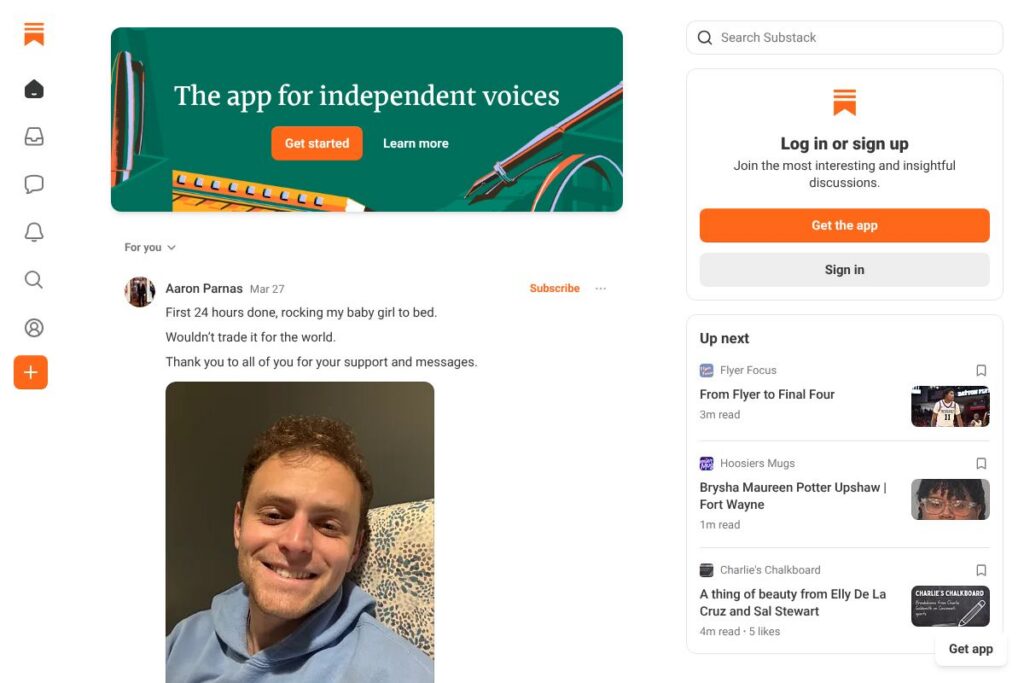
Substack is a publisher-focused platform for newsletters and paid subscriptions. Writers use Substack to publish posts, send them as email newsletters, and offer paid membership tiers with recurring billing handled through integrated payment processing. The platform also hosts archives, supports custom domains, and offers basic analytics so creators can track subscribers and revenue. View the Substack homepage for account creation and publishing tools.
Compared with Ghost and Patreon, Substack focuses specifically on the newsletter-plus-membership workflow. Ghost provides a full publishing stack that can be self-hosted or subscribed to as a managed service, which appeals to teams that need full site control. Patreon centers on membership for creators across formats including audio and video, rather than an email-first publishing experience. Compared with Mailchimp, Substack places more emphasis on long-form writing, recurring paid subscribers, and a streamlined monetization path for individuals.
All of this makes Substack a practical choice for independent writers and small editorial teams who want a low-friction way to publish and monetize a newsletter without managing payment infrastructure, hosting, or email deliverability in-house. It is particularly well suited to individual journalists, niche newsletters, and authors testing a subscription model.
How Substack Works
Writers create a Substack account, set up a publication page, and compose posts in a simple web editor that sends content both to the publication archive and to subscribers via email. Each post can be free, subscriber-only, or behind a paid membership tier, and Substack handles signup pages, paywalling, and recurring billing.
Payments and payouts are processed through integrated payment services, which manage recurring charges and refunds so authors do not need to implement their own payment stack. Substack also provides subscriber lists, basic analytics, and tools for importing or exporting subscribers to help with migration and list management.
Mobile and web reader experiences are automatic; readers get delivered posts by email and can view content on the hosted publication page. For creators who want a custom domain or additional site customization, Substack supports custom domains and limited styling options. For details on setup and publishing workflows, see the Substack homepage.
What does Substack do?
Substack is organized around publishing, subscription management, and reader engagement. Core capabilities include a text editor for long-form posts, email delivery for subscribers, subscription management for paid tiers, and revenue reporting. The platform has added features over time such as podcast hosting, community comments, and basic discovery tools for readers.
Let’s talk Substack’s Features
Newsletter editor
The editor provides a focused writing environment with options to format text, embed media, and schedule posts. It exports the post to an email-compatible format automatically so writers do not need separate email templates. This reduces setup time and keeps content consistent across web and email.
Paid subscriptions and membership management
Creators can set monthly or annual prices for subscriber access and create multiple membership tiers. Substack handles checkout pages, recurring billing, subscriber access control, and subscriber lists, making it straightforward to convert a free audience into paying members.
Payment processing and payouts
Substack uses integrated payment processing to collect subscription revenue and disburse payouts to creators, including support for refunds and failed-payment handling. This removes the need for creators to integrate external payment gateways themselves. For payment specifics, refer to Stripe’s developer documentation which Substack uses for transaction handling.
Audience analytics and subscriber tools
Built-in analytics show subscriber counts, open rates, and revenue trends. Subscriber management tools let writers segment audiences, email specific groups, and export lists for migration. These features help creators iterate on pricing, content, and audience growth.
Publishing and distribution
Posts are published to a hosted web page and delivered by email, which supports discovery through archive pages and RSS feeds. Substack also supports embedding audio for podcast episodes and offers lightweight community features like comments and discussion threads under posts.
With these features, the biggest benefit of Substack is its simplicity: writers can focus on creating content while the platform handles delivery, payments, and basic growth tools. That single-vendor experience reduces operational overhead for independent creators and small publications.
Substack pricing
Substack uses a fee-based model rather than traditional subscription tiers for creators. There is no monthly platform subscription for basic publishing; instead, Substack takes a percentage of revenue from paid subscriptions and payments are subject to third-party payment processing fees.
Subscription Platform Fee
Substack charges a platform fee of 10% on paid subscription revenue collected by creators. This fee is taken from the gross subscription amount before payouts to the creator and covers use of Substack’s hosting, billing, and distribution services.
Payment Processing Fees
Payments on Substack are processed through a payments provider, and creators should expect standard payment processing fees such as 2.9% + $0.30 per card transaction in common configurations. These payment processing fees are charged in addition to Substack’s 10% platform fee and vary by country and payment method. For more detail on transaction handling and payout schedules, review Stripe’s developer documentation and Substack’s help resources on monetization at the Substack homepage.
What is Substack Used For?
Independent writers use Substack to publish regular newsletters and convert a portion of their readership into paying subscribers. The platform is used for everything from weekday newsletters and investigative reporting to niche newsletters on hobbies, technology, and culture.
Small editorial teams and subject-matter experts use Substack to run subscriber newsletters, host subscriber-only archives, and distribute audio content to paying members. It is also a common choice for authors testing direct-to-reader business models without building custom infrastructure.
Pros and Cons of Substack
Pros
- Simple monetization: Substack makes it straightforward to set up paid subscription tiers and collect recurring revenue without building or integrating separate billing systems. This reduces technical overhead for individual creators.
- Email-first distribution: Automatic email delivery and an archive-focused web presence simplify reaching readers directly, supporting retention and giving writers control over their audience relationship.
- Low operational overhead: Hosting, deliverability, payments, and basic analytics are handled by the platform, allowing creators to focus on content rather than infrastructure.
Cons
- Revenue share on subscriptions: Substack’s 10% platform fee plus payment processing fees can reduce net revenue compared with self-hosted solutions. This may matter more for high-volume publications.
- Limited site customization: Customization options are intentionally minimal; creators wanting full design control or complex features may find Substack restrictive compared with self-hosted CMS options.
- No comprehensive public API: Substack does not offer a broad public API for advanced integrations, which can limit automation and custom workflows for teams with developer resources.
Does Substack Offer a Free Trial?
Substack offers a free tier for publishing and only charges on paid subscriptions. Writers can create an account, publish free posts, and grow an email list with no upfront fee. Paid subscriptions incur Substack’s 10% platform fee plus standard payment processing fees; there is no required trial period to use the free publishing features. See the Substack homepage for signup and publishing details.
Substack API and Integrations
Substack does not provide a comprehensive public API for arbitrary third-party integrations, but it supports subscriber import and export workflows and standard delivery formats such as RSS. For import/export instructions and migration help, consult the Substack homepage.
Payment processing is handled through an integrated payments provider; creators benefit from managed billing and payouts without separate integrations. For technical details on payment handling and supported payment methods, review Stripe’s developer documentation.
10 Substack alternatives
Paid alternatives to Substack
- Ghost — A publishing platform that can be self-hosted or used as a managed service, offering built-in memberships and no platform revenue share for self-hosted setups. Check Ghost’s site for hosting and managed plans.
- Patreon — Membership platform geared toward creators across audio, video, and writing, with tools for tiers, patron management, and creator dashboards at Patreon.
- Mailchimp — An email marketing platform with automation, templates, and audience segmentation, often used by publishers adding advanced email campaigns; see Mailchimp’s features.
- ConvertKit — Email marketing and creator-focused tools that include paid subscriptions, landing pages, and automation for creator businesses; more at ConvertKit.
- Beehiiv — A newsletter platform built with growth tools and analytics for paid newsletters, with monetization features and referral systems; explore Beehiiv.
Open source alternatives to Substack
- Ghost (self-hosted) — Open-source Node.js publishing platform that supports memberships and subscriptions when self-hosted, offering full control over data and custom themes; see Ghost’s open source project.
- WordPress — The widely used open-source CMS with plugins for memberships, paid content, and email integration, suitable for bespoke publishing stacks; learn more at WordPress.org.
- Hugo — Static site generator for fast, self-hosted publication, often paired with external mailing services for newsletter delivery; documentation at Hugo.
- Jekyll — Another static site generator used to build content-heavy sites and newsletters when combined with third-party email services; see Jekyll.
Frequently asked questions about Substack
What is Substack used for?
Substack is used to publish newsletters and manage paid subscriber relationships. Writers use it to send email content, host archives, and charge recurring subscription fees for member-only content.
How does Substack make money?
Substack earns revenue by taking a platform fee of 10% on paid subscriptions. That fee is charged on top of payment processing fees which are handled by the integrated payments provider.
Does Substack integrate with Stripe?
Substack uses integrated payment processors that include Stripe for handling transactions. Creators do not need to set up their own Stripe account to accept payments through Substack, but payment routing and fees follow the provider’s policies.
Can Substack host podcasts and audio content?
Yes, Substack supports audio and podcast episodes as part of posts or as separate podcast episodes. Creators can upload audio and distribute episodes to subscribers using Substack’s hosting and distribution tools.
Is Substack free to use for writers?
Substack is free to use for publishing free content and building an email list. Charges apply when creators enable paid subscriptions, which are subject to Substack’s 10% platform fee plus payment processing fees.
Final verdict: Substack
Substack excels at providing a streamlined, email-first publishing and monetization workflow that minimizes operational overhead for individual writers and small publications. Its integrated approach to billing, delivery, and subscriber management makes it easy to start a paid newsletter without configuring hosting, payments, or deliverability services.
Compared with Ghost, Substack is simpler to launch and maintain but involves a 10% revenue share on paid subscriptions. Ghost offers self-hosting to avoid platform revenue share but typically requires either hosting costs or a paid Ghost(Pro) plan starting at $9/month for managed hosting. For creators who prioritize speed to market and minimal technical maintenance, Substack is an effective choice; creators who need full site control and lower long-term fees may prefer a self-hosted solution such as Ghost or WordPress.