Ventrata: An Overview
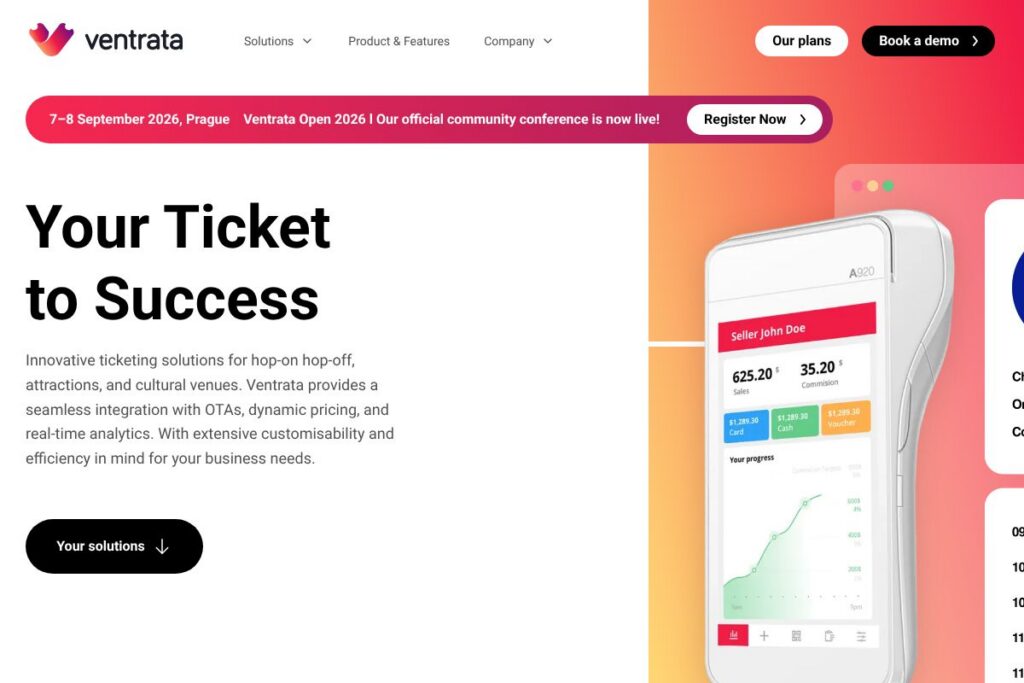
Ventrata is a purpose-built booking and ticketing system for tour operators, attractions, hop-on hop-off tours, and bus operators. It combines a cloud-based booking engine with hardware integrations such as point of sale, kiosks, and turnstiles so operators can sell, check-in, and reconcile across online channels and on-site devices.
Compared with competitors like FareHarbor, Rezdy, and Xola, Ventrata places stronger emphasis on hardware integration and offline-capable mobile operations for multi-stop or mobile experiences. FareHarbor focuses on mid-market attractions with a simple booking flow, Rezdy targets resellers and distribution partners with channel management, and Xola emphasizes checkout flexibility; Ventrata integrates these operational elements while adding turnstile and kiosk hardware workflows for large-scale or transit-like operations.
All of this makes Ventrata well suited for operators that need unified ticket sales across web, resellers, and on-site hardware, plus detailed control over capacity and pricing. The platform is most appropriate for attractions and operators that require robust device orchestration and distributed point-of-sale workflows.
How Ventrata Works
Ventrata runs as a centralized cloud booking platform that exposes a configurable booking engine to customers, resellers, and marketplaces while synchronizing inventory and capacity across channels. Operators set up products, availability windows, and pricing rules in the dashboard, and bookings made online or through partners flow back into a single operations view for fulfillment and reporting.
On-site, the platform connects to POS terminals, handheld devices, kiosks, and turnstiles to validate tickets, process sales, and record attendance even when connectivity is intermittent. The system reconciles offline transactions once connectivity returns, keeping inventory and reporting consistent across locations and sales channels.
Operational workflows commonly include automated manifests for drivers and guides, real-time seat or capacity blocking for multi-stop tours, and channel mapping so listings remain consistent across OTAs and direct booking paths. Frontline staff use dedicated device apps to check in guests, issue refunds or exchanges, and receive remote technical support when needed.
What does Ventrata do?
Ventrata is organized around ticket sales, resource allocation, and on-site operations. Core capabilities include dynamic pricing, multi-channel distribution, offline-capable hardware integrations, and centralized reporting. The platform also emphasizes mobile operations for hop-on hop-off and guided tour contexts.
Let’s talk Ventrata’s Features
Dynamic Pricing
Operators can create pricing rules that change by date, time, occupancy, or demand signals so popular slots can be priced differently to manage revenue and availability. This helps balance load across service windows while maintaining visibility into price changes and their effect on bookings.
Multi-Channel Booking
The platform synchronizes inventory and booking data across direct web bookings, reseller channels, and marketplace partners so operators avoid overbookings and maintain consistent product listings. Channel connectivity reduces manual reconciliation and enables broader market exposure from one dashboard.
Hardware Integration
Ventrata supports dedicated hardware such as POS devices, kiosks, and turnstiles with built-in offline modes so check-in and sales continue at high-traffic locations. Hardware integration streamlines guest flow and reduces queue times by automating ticket validation and entry control.
Offline Mode and Sync
Devices used for mobile sales and gate entry can operate without constant internet access, caching transactions locally and syncing once connectivity returns. This feature is especially important for vehicles, remote stops, and densely visited sites where coverage is intermittent.
Mobile Operations for Hop-on Hop-off
The platform supports route-based inventory and time-windowed products that reflect multi-stop services, allowing operators to block seats, manage on-board capacity, and process payments on the move. Mobile apps provide guides and drivers with manifests, sales tools, and check-in capabilities.
Resource and Capacity Management
Ventrata provides tools to allocate guides, vehicles, and time-slot capacity so operators can avoid double-booking resources and see utilization at a glance. Capacity controls integrate into the booking engine so availability shown to customers reflects real operational constraints.
Reporting and Analytics
Built-in reporting surfaces sales, channel performance, and attendance trends so operators can optimize schedules and staffing. Reports can be exported or scheduled for stakeholders to review revenue and operational KPIs.
Online Booking Engine
The web booking engine is configurable for different product types, add-ons, and ticket classes, and can be embedded into operator websites or used as a hosted booking page. It supports voucher redemption, group bookings, and promotional codes to match common commerce needs.
With these capabilities, the biggest benefit of Ventrata is centralizing sales and on-site operations into a single system that handles both distributed channel management and physical-device workflows. That combination shortens queues, reduces reconciliation work, and gives operators unified control over pricing and capacity.
Ventrata pricing
Ventrata offers flexible enterprise and commercial pricing models tailored to different operator sizes and hardware requirements, with options typically negotiated for channel connectivity, device bundles, and support levels. For specific plan structures, device add-ons, or reseller fees, consult Ventrata’s commercial information and contact channels on the Ventrata website.
For tailored quotes and deployment options, see Ventrata’s website for contact and sales details. If you need enterprise-level hardware bundles or multi-site licensing, the vendor’s team can provide a proposal based on locations, hardware needs, and transaction volumes.
Ventrata Use Cases
Ventrata is often used by hop-on hop-off bus operators who need mobile sales, route-based inventory, and on-board check-in across multiple vehicles. The platform handles seat blocking, on-the-move payment capture, and syncs manifests to central records for reporting and reconciliation.
Sightseeing operators and observation decks use Ventrata to manage timed-entry tickets, dynamic pricing for peak windows, and hardware entry control to speed throughput. Attractions and leisure sites deploy the system for integrated online sales, kiosk check-in, and device-managed refunds or exchanges, improving guest flow and operational visibility.
Pros and Cons of Ventrata
Pros
- Hardware-first integrations: Ventrata connects to POS terminals, kiosks, and turnstiles which reduces queue times and simplifies on-site operations while maintaining central inventory.
- Mobile operations support: The platform is tailored to route-based and mobile services, enabling hop-on hop-off and multi-stop tours to sell and validate tickets from multiple locations.
- Multi-channel distribution: Centralized channel management reduces overbookings and expands distribution to resellers and marketplaces from a single dashboard.
- Offline-capable workflows: Devices can operate without constant internet access and reconcile transactions later, which is essential for remote stops and vehicles.
Cons
- Enterprise orientation: The platform is geared toward operators with multi-site or hardware needs, which may be more complex than smaller operators require and could involve higher implementation effort.
- Custom pricing and procurement: Because pricing is typically negotiated, smaller operators may need to engage sales for clarity rather than selecting a transparent self-service plan.
- Learning curve for device orchestration: Managing kiosks, turnstiles, and handhelds alongside channel configuration requires operational processes and training to run smoothly.
Does Ventrata Offer a Free Trial?
Ventrata offers custom commercial plans and trial or pilot access on request. Operators typically discuss a pilot deployment or demonstration with sales to validate device integration, booking flows, and channel setups before committing to a contract.
Ventrata API and Integrations
Ventrata provides developer-facing integration options and connects to distribution channels, payment gateways, and on-site hardware ecosystems; operators can extend workflows through APIs and partner connectors. For developer resources or to evaluate integrations for payment processing and channel partners, refer to Ventrata’s developer documentation on their site.
Key integrations commonly include channel managers and reseller marketplaces, payment processors, and device firmware or middleware for kiosks and turnstiles, enabling end-to-end transaction flows between sales channels and physical entry points.
10 Ventrata alternatives
Paid alternatives to Ventrata
- FareHarbor — Booking and reservation system popular with attractions and tour operators, with a focus on straightforward online checkout and marketplace integrations.
- Rezdy — Distribution-focused booking software that emphasizes reseller and API connectivity for channel partners and OTAs.
- Xola — Checkout and operations platform that supports checkout customization and partner distribution for tour operators.
- Checkfront — Online booking system with property and resource management features, useful for tours, rentals, and attractions.
- Peek Pro — Enterprise-ready booking and distribution tools with built-in channel management aimed at experiences and attractions.
- TrekkSoft — Sales and distribution platform with a focus on travel companies and tour resellers, including POS functionality.
- TicketingHub — Cloud ticketing solution for attractions and tours with a focus on multi-site management and online distribution.
Open source alternatives to Ventrata
- Pretix — Open-source ticketing system built for events and attractions with a modular plugin ecosystem and self-hosting options.
- Attendize — Self-hosted event ticketing platform that supports online sales, attendee lists, and basic reporting for smaller organizers.
- Open Event — An open-source event management and ticketing project aimed at organizers who want a customizable self-hosted stack.
Frequently asked questions about Ventrata
What is Ventrata used for?
Ventrata is used to manage ticket sales, on-site check-in, and channel distribution for tours and attractions. Operators use it to centralize bookings, control capacity, and integrate with hardware devices for entry and sales.
Does Ventrata integrate with third-party booking channels?
Yes, Ventrata supports multi-channel distribution and connects to resellers and marketplaces. Inventory and availability are synchronized so listings remain consistent across direct and partner channels.
Can Ventrata operate offline on vehicles and remote kiosks?
Yes, Ventrata includes offline-capable device modes. Transactions and validations made offline sync back to the central system when connectivity is restored.
Is Ventrata suitable for hop-on hop-off bus operations?
Yes, Ventrata supports route-based inventory and mobile check-in for multi-stop services. The platform is designed to manage on-board sales, manifests, and seat blocking for transit-style tours.
How do I get pricing for Ventrata?
Ventrata uses custom commercial pricing based on operator size and hardware requirements. Contact Ventrata through their website to request a quote or discuss pilot deployment options.
Final verdict: Ventrata
Ventrata excels at combining ticketing, hardware integration, and mobile operations into a single platform, making it a strong choice for attractions and tour operators that require turnstile, kiosk, and on-board device support. Its offline capabilities and channel synchronization reduce reconciliation work and keep visitor flows moving at busy sites.
Compared with Rezdy, which provides transparent subscription and per-booking plans for distribution-heavy operations, Ventrata positions itself toward operators needing device orchestration and enterprise deployments with custom pricing. If you need tight integration between physical entry hardware and online sales, Ventrata is a practical fit; if you prioritize simple self-service pricing and reseller-first distribution, a platform like Rezdy may be easier to evaluate quickly.
For demos, pilot deployments, and commercial quotations, start with Ventrata’s website to request a tailored assessment and see how device bundles, channel connections, and pilot terms would apply to your operation.