Botpress: An Overview
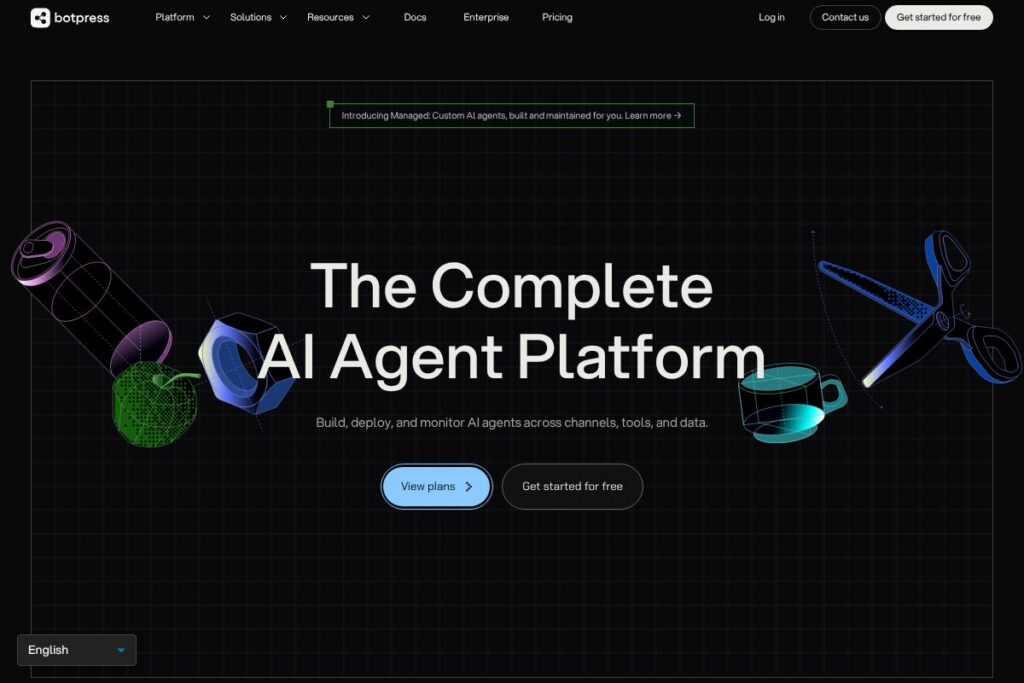
Botpress is an all-in-one AI agent platform for building conversational agents that combine LLM reasoning, tool access, and custom code. It provides a developer-focused runtime, a custom inference engine, and connectors for channels and data so teams can ship conversational features that interact with internal systems and external APIs.
Compared with other agent platforms, Rasa is more focused on open-source ML pipelines and classic NLU models, while Dialogflow emphasizes tight integration with Google Cloud and simple intent matching for basic bots. Microsoft Bot Framework targets enterprise integration with Azure and an emphasis on channel adapters. Botpress sits between these options by offering an open runtime plus managed cloud services and a custom inference engine aimed at multi-step agent logic.
All of this makes Botpress well suited to developer teams that want deep control over agent behavior, plus product teams that need production-ready observability and deployment options. The platform is especially useful when agents must access company data, run custom business logic, or be versioned and audited over time.
How Botpress Works
Botpress runs agents in isolated, versioned runtimes so each deployed agent has its own durable environment and lifecycle. The platform’s inference engine coordinates instruction decoding, memory access, tool selection, JavaScript execution in a safe sandbox, and structured response generation without requiring brittle prompt orchestration.
Typical workflows start with a developer defining an agent’s personality and flows, adding connectors to data sources or tools, and injecting custom code into lifecycle hooks. Agents can be tested locally or deployed to Botpress Cloud, exposed to channels such as web chat, SMS, or messaging platforms, and monitored via built-in observability tools. For implementation details, see the Botpress documentation site.
What does Botpress do?
Botpress combines a custom LLM inference engine with runtime isolation, an API layer, and integration tooling so teams can build agents that execute multi-step logic and access external data. Core capabilities include programmatic agent lifecycle hooks, sandboxed code execution, multi-channel connectors, observability, and hosted or self-hosted deployment options.
Key functionality includes:
LLMz inference engine
The inference engine coordinates the agent’s decisions, manages memory, selects tools, and formats structured outputs. It runs agent logic internally to support complex, multi-step flows and safe execution of generated code, reducing the need for external orchestration.
Isolated, versioned runtimes
Each agent runs in its own self-contained environment that is versioned and durable, allowing teams to roll out updates safely and reproduce past behavior. This model helps with auditability and ensures compatibility as the platform evolves.
Custom code and lifecycle hooks
Developers can inject JavaScript into lifecycle events and actions to run business logic, call internal APIs, or transform data. The sandboxed execution environment balances flexibility with runtime safety for production workloads.
Multi-channel deployment
Agents can be deployed across web chat, messaging channels, email, voice, and third-party platforms via connectors and webhooks. This lets teams expose the same agent logic across customer support, internal tools, and voice interfaces.
Data connectors and retrieval
Botpress supports integrating knowledge sources and vector stores for retrieval-augmented generation, allowing agents to answer from internal documents, databases, or CRM records. This enables context-aware responses while keeping data control within your stack.
Observability and monitoring
The platform provides logs, execution traces, and metrics so teams can inspect agent actions, debug failures, and measure performance. Observability helps iterate on behavior and maintain operational health in production.
API and SDK access
Botpress exposes APIs for sending messages, managing agents, and automating workflows, enabling integration into CI/CD pipelines and custom tooling. The APIs are useful for building conversational experiences that are triggered by external events or embedded in applications.
With these capabilities, Botpress helps teams build production-grade conversational agents that combine LLM reasoning, tool use, and custom business logic while maintaining operational control.
Botpress pricing
Botpress uses a hybrid model with an open-source self-hosted core plus commercial cloud and enterprise offerings. The open-source runtime lets teams run agents on their own infrastructure at no license cost, while managed cloud services and professional services are available under commercial terms.
Self-hosted (Open source)
The Botpress core is available as an open-source project suitable for self-hosting; teams can download the source and run agents without subscription fees. For code and installation instructions, see the Botpress GitHub repository.
Cloud and Enterprise
Cloud and enterprise deployments are offered with hosted infrastructure, SLAs, and optional professional services for agent integration and ongoing optimization. Enterprise pricing is customized based on usage, required features, and support level. For tailored details and options, contact Botpress through their enterprise offerings page or the contact form.
What is Botpress Used For?
Botpress is commonly used to build customer-facing virtual agents for support and sales that need to access product data, order histories, and knowledge bases. Organizations use it to replace scripted chatbots with agents that can perform multi-step tasks and call external systems.
Internal use cases include employee help desks, IT automation, and knowledge retrieval where agents fetch and synthesize information from internal documents and databases. Developers also use Botpress to prototype domain-specific assistants that require custom code and fine-grained control over behavior.
Pros and Cons of Botpress
Pros
- Developer-friendly platform: The runtime, API surface, and ability to inject custom JavaScript make Botpress a productive environment for engineering teams building complex agents.
- Isolated, versioned runtimes: Versioning and durable agent environments improve reproducibility and simplify updates across deployments.
- Flexible deployment options: You can self-host the open-source core or use hosted cloud services and professional services for managed deployments.
- Advanced inference capabilities: The custom inference engine supports multi-step logic, tool selection, and structured outputs without external orchestration.
- Observability and operational tooling: Built-in logging and traces help teams monitor agent behavior and troubleshoot issues in production.
Cons
- Commercial features under enterprise terms: Some managed services, enterprise features, and professional integrations are available only through paid plans and custom agreements.
- Steeper learning curve for non-developers: The platform’s focus on custom code and developer tooling can be more complex for product teams without engineering support.
- Self-hosting operational overhead: Running the open-source runtime internally requires infrastructure, security, and maintenance effort compared to fully hosted SaaS alternatives.
Does Botpress Offer a Free Trial?
Botpress offers a free self-hosted edition and a free Cloud tier to get started. The open-source runtime can be used locally or on your infrastructure without license fees, and the Cloud tier provides a way to test hosted agent features; for larger deployments and enterprise needs contact Botpress for commercial options via the contact form.
Botpress API and Integrations
Botpress provides a developer API for messaging, agent management, and data operations; the platform documentation includes API reference and examples for sending messages and managing agents. Refer to the Botpress API documentation for endpoint details and sample requests.
Common integrations include webchat widgets, Slack, Microsoft Teams, Twilio for SMS/voice, and connectors to databases and vector stores for retrieval-augmented generation. Webhooks and SDKs make it straightforward to connect Botpress agents to CRMs, analytics, and custom backend services.
10 Botpress alternatives
Paid alternatives to Botpress
- Dialogflow — Google Cloud conversational platform with intent matching, speech support, and tight Google Cloud integration for enterprise solutions.
- Microsoft Bot Framework — Enterprise-grade SDK and channel connectors with deep Azure integration and developer tooling for complex deployments.
- IBM Watson Assistant — Conversational AI with enterprise security controls, dialog tooling, and integration with IBM Cloud services.
- Amazon Lex — AWS conversational service with automatic speech recognition and direct access to AWS infrastructure and services.
- Cognigy — Enterprise conversational automation focused on contact center and customer service orchestration with low-code flows.
- LivePerson — Conversational customer engagement platform combining messaging, analytics, and a managed services option.
Open source alternatives to Botpress
- Rasa — An open-source conversational AI framework focused on machine learning-based NLU, dialogue management, and an enterprise option for scale.
- DeepPavlov — Open-source library for building conversational systems with a focus on research-grade NLP components and pipelines.
- OpenDialog — A platform for modeling conversational logic and state machines with an emphasis on designer-friendly tooling.
- ChatterBot — A Python library for building rule-based and retrieval chatbots, suited for lightweight prototypes and educational projects.
Frequently asked questions about Botpress
What is Botpress used for?
Botpress is used to build and operate AI agents that combine LLM reasoning, tool access, and custom code. Teams deploy agents for customer support, internal help desks, and automation that requires access to company data.
Does Botpress have an API?
Yes, Botpress exposes APIs for messaging, agent management, and administration. The API documentation covers endpoints for sending messages, creating agents, and managing runtime behavior on the Botpress docs site.
Is Botpress open source?
Yes, Botpress offers an open-source core that can be self-hosted. The project repository and installation guides are available on the Botpress GitHub repository.
How much does Botpress cost?
Botpress offers a free self-hosted edition and commercial cloud and enterprise options with custom pricing. For detailed enterprise plans and managed services, contact Botpress through their enterprise offerings page.
Can Botpress connect to Slack and other messaging platforms?
Yes, Botpress can integrate with Slack, Microsoft Teams, Twilio, web widgets, and other channels. Connectors and webhooks let agents send and receive messages across platforms and trigger backend workflows.
Final Verdict: Botpress
Botpress stands out as a developer-oriented AI agent platform that combines an open-source runtime with a managed cloud option and a custom inference engine for multi-step agent logic. It excels when teams need sandboxed code execution, versioned agent runtimes, and observability to run agents in production while keeping tight control over data and integrations.
Compared with Rasa, which emphasizes an open ML pipeline and offers enterprise licensing for scale, Botpress provides a more integrated inference engine and managed services that reduce the need to assemble multiple components. Pricing for enterprise and managed cloud is custom for both platforms, so organizations should evaluate operational requirements and the level of managed support needed when choosing between them.