What is Clinicient
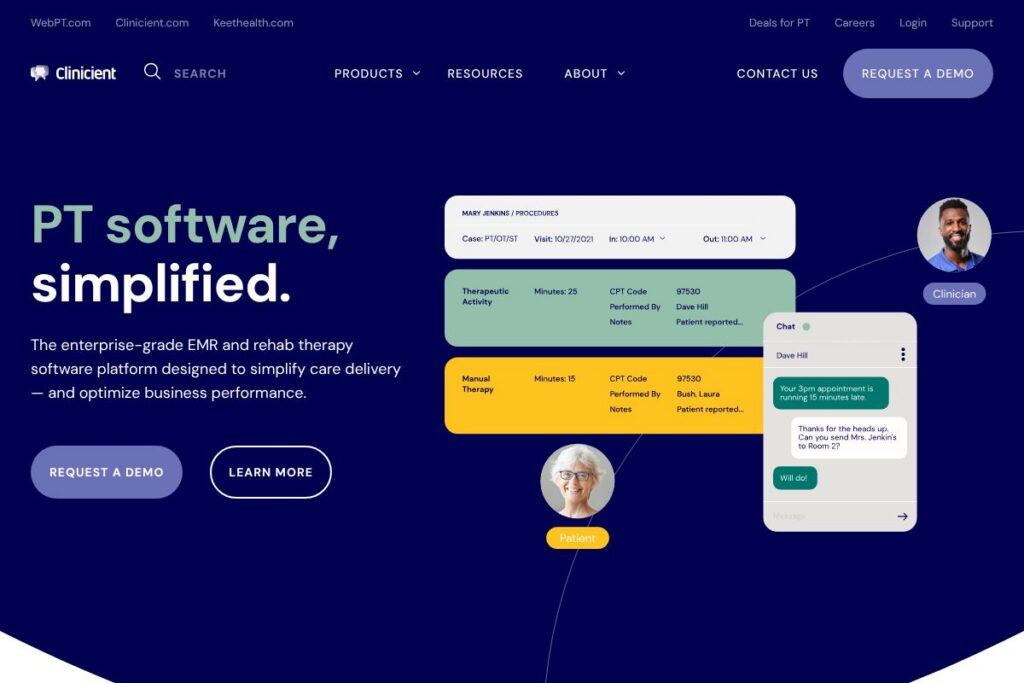
Clinicient is an enterprise-grade electronic medical record and rehab therapy platform designed for physical therapy, occupational therapy, and speech-language pathology practices. The Insight Platform combines clinical documentation, home exercise programs, outcomes measurement, scheduling, and billing into a single data model so clinical notes and charges are tightly coupled for faster charge capture and fewer rejected claims.
Compared with WebPT and other therapy-focused vendors, Clinicient emphasizes enterprise scalability, real-time reporting, and interoperability for multi-site organizations. Unlike single-clinic solutions that publish fixed tiered plans, Clinicient positions itself for larger practices that need HL7-compatible interfaces, centralized reporting, and integrated revenue cycle workflows.
Clinicient does particularly well at automating compliance, reducing documentation time, and linking clinical workflows to billing. That combination makes it a strong fit for multi-clinic therapy groups, hospital outpatient departments, and health systems that require configurable templates, centralized administration, and a powerful integration ecosystem.
How Clinicient Works
Clinicient stores clinical, scheduling, and financial data in a unified platform so documentation and charge capture happen in the same workflow. Clinicians use configurable templates and device-agnostic tools like speech-to-text and bookmarking to document faster, while the system flags compliance gaps and required billing codes before claims are submitted.
Front-office and billing teams work from the same dataset: scheduling, eligibility checks, appointment reminders, and denials management are driven by the platform to reduce manual handoffs. Real-time dashboards and reporting provide operational visibility across clinics, and HL7-based interfaces and APIs enable connections to third-party systems and clearinghouses.
Clinicient features
Clinicient centers its feature set on clinical efficiency, outcomes tracking, and enterprise billing. Core capabilities include configurable documentation templates, integrated charge capture, outcomes measurement, scheduling and reminders, analytics, and HL7 interoperability. Recent platform updates emphasize mobile dictation, automation for compliance, and improved reporting for multi-site operations.
The platform includes several powerful capabilities:
Clinical documentation and templates
Clinicians create and reuse discipline-specific templates for PT, OT, and SLP that enforce documentation standards and streamline charting. Templates reduce variability across clinicians, support compliance checklists, and speed up note completion when combined with speech-to-text and bookmarking.
Charge capture and integrated billing
Charge capture is tightly coupled to documentation so billed services are supported by clinical notes at the point of care. Built-in billing workflows and claims management reduce errors and improve first-pass acceptance by connecting documentation, insurance eligibility, and claim submission.
Outcomes measurement and reporting
The platform supports standardized outcome instruments and customizable metrics so teams can track patient progress and program performance. Aggregated reporting and drill-down dashboards enable clinicians and administrators to monitor clinical outcomes alongside financial KPIs.
Scheduling, reminders, and patient engagement
Scheduling tools include multi-location calendars, automated appointment reminders, and tools to reduce no-shows. Patient-facing features like home exercise program delivery and mobile access support adherence and extend care between visits.
Interoperability and integrations
Clinicient supports HL7 interoperability and an integration ecosystem that connects to practice management systems, billing clearinghouses, and EHRs. Those interfaces help larger organizations centralize data while preserving specialized therapy workflows; see the HL7 interoperability standard for protocol details.
Mobility and speech-to-text
Mobile dictation and device-agnostic access let clinicians document from phones or tablets for faster charting at the point of care. Speech-to-text, bookmarking, and shortcut-driven templates contribute to the reported time savings in documentation.
With these features combined, Clinicient aims to reduce administrative burden while improving billing accuracy and clinical oversight for therapy organizations.
Clinicient pricing
Clinicient uses a custom enterprise pricing model tailored to organization size, deployment needs, and required services rather than publicly listed standard plans. Pricing is typically structured for multi-site practices and includes implementation, training, and optional managed services depending on customer requirements.
For details about licensing, implementation fees, and any available trial or demo options, see Clinicient’s information on the Insight Platform and product offerings.
What is Clinicient Used For?
Clinicient is used to manage end-to-end operations for physical therapy, occupational therapy, and speech-language pathology practices. Typical workflows supported include documentation and charting, billing and claims management, outcomes tracking, appointment scheduling, and patient engagement through home exercise programs.
Ideal users include multi-clinic therapy groups, hospital outpatient departments, and health systems that need centralized reporting, interoperability with existing EHRs via HL7 interfaces, and enterprise-grade billing and compliance automation to maintain consistent workflows across locations.
Pros and Cons of Clinicient
Pros
- Therapy-specific workflows: Clinicient provides discipline-focused templates and documentation that match PT, OT, and SLP clinical workflows, which reduces charting time and training overhead.
- Enterprise scalability: The platform supports multi-site implementations with centralized reporting and role-based administration useful for growing therapy organizations.
- Tight documentation-to-billing linkage: Integrated charge capture and compliance automation reduce claim rejections and increase billable time for therapists.
- Mobile documentation options: Speech-to-text and mobile access allow clinicians to document at the point of care, improving efficiency and clinician satisfaction.
Cons
- Custom pricing model: Because pricing is enterprise-focused and not publicly listed, small clinics seeking transparent, self-serve pricing may need to request a quote and undergo a sales process.
- Implementation complexity: Multi-site and highly customized deployments can require significant implementation and training resources, which may extend time to full adoption.
- Niche focus: The therapy-specific nature is an advantage for rehab clinics but may be less suitable for organizations seeking a general-purpose EHR with broader clinical modules.
Does Clinicient Offer a Free Trial?
Clinicient is enterprise software with paid plans and typically offers demos and guided trial or pilot options on request. Prospective customers can request a product demonstration and discuss pilot arrangements with sales and professional services to evaluate workflows, integrations, and reporting needs.
Clinicient API and Integrations
Clinicient supports HL7 interfaces for interoperability and maintains an integration ecosystem to connect with billing clearinghouses, patient portals, scheduling systems, and other healthcare IT components. Organizations can use these connections to sync patient demographics, visit data, and claims information across systems.
For technical teams interested in integration specifics, explore Clinicient’s platform resources and integration options on the Clinicient site, and consult the HL7 interoperability guidance for standards context.
10 Clinicient alternatives
Paid alternatives to Clinicient
- WebPT — Cloud-based therapy EMR focused on outpatient clinics with user-friendly documentation, scheduling, and billing; often chosen by small to mid-size practices. See WebPT’s product information.
- TheraOffice — Practice management and documentation platform for rehab clinics that combines scheduling, billing, and clinical notes in a single application.
- Raintree — Practice management and EMR geared to therapy and allied health, with integrated reporting and billing tools for multi-location practices.
- TherapyNotes — Electronic health record and practice management often used for outpatient behavioral health but also adopted by some therapy practices for scheduling and billing.
- Kareo — Billing and practice management platform focused on independent practices that need integrated claims management and reporting.
- Epic — Enterprise EHR with outpatient therapy modules used by health systems needing comprehensive clinical and administrative coverage across departments.
Open source alternatives to Clinicient
- OpenEMR — Open-source electronic medical record with customizable modules for scheduling, charting, and billing that can be adapted for therapy workflows; see OpenEMR project.
- OpenMRS — Modular open-source medical record platform used primarily in global health settings, which can be extended to support therapy documentation and custom forms; see OpenMRS.
- OpenEHR / Oscar EMR — Community-driven EMR platforms that provide foundations for custom clinical workflows and integration, suitable for organizations willing to invest in configuration and development.
Frequently asked questions about Clinicient
What is Clinicient used for?
Clinicient is used to manage clinical documentation, scheduling, billing, and outcomes for PT, OT, and SLP practices. The platform centralizes workflows so clinical notes, charge capture, and reporting are connected to support operations and compliance.
Does Clinicient integrate with other EHRs and systems?
Yes, Clinicient supports HL7 interoperability and a range of third-party integrations. Those connections enable data exchange with practice management systems, clearinghouses, and patient portals to maintain consistent records across systems.
How much does Clinicient cost?
Clinicient uses custom enterprise pricing rather than public tiered plans. Organizations should contact Clinicient to request a tailored quote that reflects deployment scope, integration needs, and professional services.
Can Clinicient support multi-site therapy practices?
Yes, Clinicient is designed for multi-location and enterprise deployments. Centralized reporting, role-based administration, and integration capabilities help manage operations across clinics and departments.
Does Clinicient offer mobile documentation features?
Yes, Clinicient includes mobile access and speech-to-text capabilities for faster documentation. Those features let clinicians document on phones or tablets and reduce time spent on notes after patient visits.
Final verdict: Clinicient
Clinicient is a strong choice for therapy organizations that need an enterprise-grade EMR built specifically for PT, OT, and SLP workflows. Its strengths are discipline-specific documentation, integrated charge capture, outcomes reporting, and HL7-ready interoperability that support multi-site operations and centralized administration.
Compared with WebPT, which often targets smaller and mid-size clinics with transparent plan tiers, Clinicient leans toward larger practices and health systems that require custom deployments and deeper integration. For organizations prioritizing enterprise reporting, automated compliance, and a tightly coupled clinical-to-billing workflow, Clinicient offers capabilities that justify engaging the vendor for a tailored demo and pricing discussion.