What is Yelp
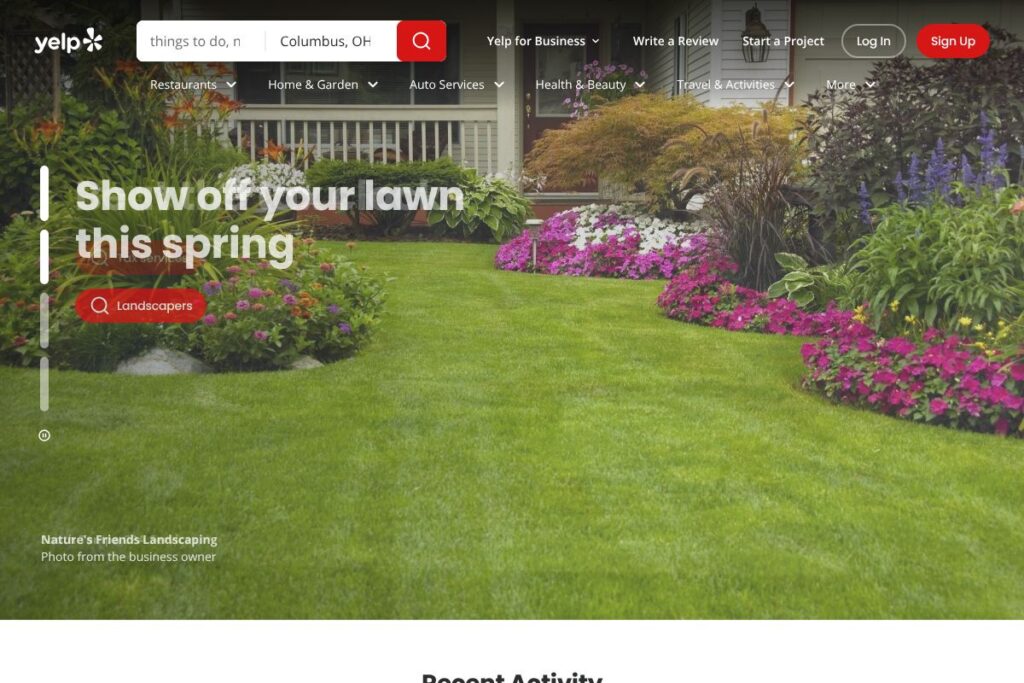
Yelp is a consumer-facing directory and review platform focused on local businesses. It aggregates user-written reviews, star ratings, photos, and operational details for categories that include restaurants, bars, dentists, doctors, beauty salons, and a broad range of local services. The platform is commonly used by people researching where to eat, which service providers to hire, and what entertainment options to try in their area.
Yelp competes with general mapping and review services such as Google Maps, specialized reservation platforms like OpenTable, and travel review sites such as TripAdvisor. Compared with Google Maps, Yelp places a heavier emphasis on user reviews and curated local content; compared with OpenTable, Yelp covers a much broader set of business categories beyond restaurants. All of this makes Yelp particularly useful for people who want qualitative, community-sourced feedback and photos tied to specific local businesses.
Yelp does particularly well at surfacing local opinions and supporting business discovery through searchable categories, neighborhood filters, and user-generated media. It is best for consumers researching local options and for small to medium business owners who want a public presence and tools to manage reviews and visibility.
How Yelp Works
Users search for businesses by name, category, or location using the web or mobile apps, then refine results with filters such as price range, open now, and neighborhood. Each business has a listing that collects reviews, star ratings, photos, hours, contact details, and links to call or get directions, enabling quick decision-making while on the go.
Business owners can claim their listing, respond to reviews, update hours and menus, add photos, and opt into paid programs such as advertising or reservation integrations. Consumers contribute by leaving reviews, uploading photos, checking in, or answering community questions, which together influence search visibility and perceived reputation.
Common workflows include reading recent reviews before choosing a restaurant, comparing dentists by user ratings and insurance notes, and contacting service providers directly from their listing. For businesses, the workflow centers on claiming the page, maintaining accurate information, and using owner tools to monitor and respond to customer feedback.
What does Yelp do?
Yelp organizes local business information around searchable listings and community reviews. Core capabilities include user-contributed star ratings and reviews, searchable business pages, integrated photos, and owner controls for updating business information. The platform also provides advertising and booking integrations that help businesses convert searchers into customers.
The platform includes several powerful capabilities:
User Reviews and Ratings
Yelp collects user-written reviews with star ratings and optional photos that provide qualitative insight into customer experiences. Reviews are the primary signal for other users when comparing options, and recent and highly-rated reviews tend to influence visibility in search results.
Local Business Pages
Each business page consolidates practical details such as hours, address, phone number, amenities, and menu links when applicable, plus reviewer photos and commonly asked questions. This centralizes the information consumers need to decide and act, and it gives owners a single place to present official updates.
Search, Filters, and Local Discovery
Search tools let users filter by neighborhood, price, cuisine, open hours, and other attributes to narrow down options quickly. Neighborhood-based discovery and curated lists help people find relevant businesses in unfamiliar areas, or surface nearby options when they are traveling.
Reservation and Ordering Integrations
Yelp integrates with reservation and ordering partners to let users book tables or place pickup and delivery orders directly from business listings. Those integrations reduce friction between discovery and conversion, benefiting restaurants and customers looking for immediate availability.
Owner Tools and Advertising
Yelp provides business owners with controls to claim listings, respond to reviews, post updates, and access analytics about page views and leads. Paid advertising and enhanced profile features are available to amplify visibility, though those programs use negotiated or tiered pricing rather than a single public rate.
Community Q&A and Photos
Community features let users ask questions on a business page and upload photos that illustrate the real experience. These contributions add context that complements star ratings and help users make practical decisions, such as whether a venue is family friendly or wheelchair accessible.
With these capabilities, Yelp helps consumers discover, evaluate, and engage local businesses while giving owners tools to manage their public presence and measure customer interest.
Yelp Pricing
Yelp uses a mixed model: consumer access is free while business-facing products include free basic listings and paid promotional or feature-based offerings that use custom pricing. Advertising and advanced business services are typically priced based on market, competition, and desired features rather than a single public plan.
Business Listings and Basic Features
Basic listing: Free (Business profile, hours, address, photos, review responses)
Advertising and promotional features: Custom pricing (Visibility boosts, targeted ad placements, analytics) — businesses should contact Yelp for tailored quotes and available packages; view Yelp for Business for details.
Reservations and Ordering
Reservations and ordering integrations: Pricing varies by integration partner and feature set, with options for per-seat booking fees or commission structures depending on the partner. See Yelp’s information about reservations and ordering on the business pages and explore the available integrations through Yelp for Business.
For specific rates, current promotional options, and details tailored to your market, check Yelp’s business resources and contact their sales team via the Yelp for Business page.
What is Yelp Used For?
Yelp is primarily used for local discovery: finding restaurants, nightlife, medical providers, salons, and local services based on community reviews and practical business information. Consumers rely on Yelp to compare alternatives by rating, price, photos, and recent reviewer experiences.
Businesses use Yelp to maintain an online presence, respond to customer feedback, and access lead-generation tools such as advertising, reservation links, and contact metrics. It is particularly useful for small and medium businesses that depend on local foot traffic and reputation management.
Pros and cons of Yelp
Pros
- Large review base: Yelp benefits from a vast amount of user-generated reviews and photos, which provides a rich dataset for consumers researching local options.
- Comprehensive local listings: Business pages consolidate hours, contact details, menus, and booking links so users can move from discovery to action quickly.
- Owner controls and analytics: Business owners can claim their listing, respond to reviews, update information, and access basic analytics to monitor engagement.
- Search and filter depth: Neighborhood filters, price ranges, and category tags make it easier to find businesses that match specific needs.
Cons
- Advertising cost variability: Paid promotional features use custom pricing, which can be expensive for some small businesses and opaque without direct consultation.
- Review moderation disputes: Business owners sometimes disagree with Yelp’s review filtering and moderation, which can affect perceived fairness and require time to resolve.
- Local coverage inconsistency: In some smaller markets, Yelp may have fewer reviews and less up-to-date listings compared with larger metropolitan areas.
Does Yelp Offer a Free Trial?
Yelp offers a free basic listing for businesses and free access for consumers. Business owners can claim a free profile that includes core listing details and the ability to respond to reviews, while advertising, enhanced profiles, and reservation integrations are paid options that typically require contacting Yelp for pricing or trial information.
Yelp API and Integrations
Yelp provides a developer API, known as the Yelp Fusion API, that exposes business, review, and location data for integration into third-party apps. The Yelp API documentation outlines endpoints for searching businesses, retrieving detailed business information, and accessing review snippets.
For business integrations, Yelp connects with reservation and ordering partners and supports integrations that allow booking or ordering directly from listings. Explore the business integration options through the Yelp for Business portal.
10 Yelp alternatives
Paid alternatives to Yelp
- Google Maps — Broad mapping and discovery platform with directions, business details, and reviews integrated with search and navigation.
- TripAdvisor — Focused on travel and hospitality reviews, useful for hotels, attractions, and restaurants with traveler-centric content.
- OpenTable — Reservation-first platform that also includes dining reviews and guest management tools for restaurants.
- Zomato — Restaurant discovery and menu listings with reviews and ordering in supported markets.
- Foursquare — Local discovery and recommendation engine with a focus on personalized suggestions and check-ins.
- DoorDash — Delivery marketplace with restaurant discovery features and user ratings tied to delivery experience.
- Grubhub — Food delivery service that lists local restaurants and includes ratings from delivery customers.
- Facebook — Local business pages with community reviews, messaging, and social signals tied to local discovery.
- Angi — Marketplace for home services with reviews and contractor profiles, focused on service hiring.
- Yellow Pages — Traditional directory presence with business listings and category search for local services.
Open source alternatives to Yelp
- OpenStreetMap — Community-driven map data that powers local discovery and can be integrated into custom directory projects for free.
- Pelias — Open-source geocoder and search stack for building local search and discovery services on top of open data.
- uMap — Tool that lets communities build custom maps and location-based directories using OpenStreetMap data.
- MapServer — An open-source platform for publishing spatial data and building custom map-driven directory interfaces.
Frequently asked questions about Yelp
What types of businesses can be listed on Yelp?
Yelp supports a wide range of local businesses such as restaurants, dentists, bars, beauty salons, doctors, and service providers. Most categories that serve local customers in person or via ordering are eligible for a listing.
Does Yelp charge consumers to read reviews?
No, Yelp is free for consumers to search and read reviews. Creating an account to write reviews or save lists is also free.
Can businesses respond to reviews on Yelp?
Yes, business owners can claim their Yelp page and respond to reviews publicly. Claiming a page also unlocks options to update hours, post photos, and access basic analytics.
Does Yelp offer API access for developers?
Yes, Yelp provides the Yelp Fusion API for developers. The Yelp API documentation explains available endpoints and usage limits.
How does Yelp handle advertising and promoted listings?
Yelp offers paid advertising and enhanced profile features with custom pricing. Businesses interested in paid promotions should review options on the Yelp for Business site and contact sales for market-specific rates.
Final verdict: Yelp
Yelp is a mature local discovery platform that excels at aggregating user reviews, photos, and practical business information across a wide range of categories. It is particularly valuable for consumers making decisions about restaurants, nightlife, and local services, and for business owners who need a public profile and tools to manage online reputation.
Compared with Google Maps, which is free and deeply integrated into navigation and search, Yelp offers more structured review-centric pages and community features, while advertising and enhanced business services on Yelp use custom pricing that can be more targeted to local marketing needs. For businesses that prioritize review management and customer feedback visibility, Yelp remains a core platform to maintain alongside mapping and reservation services.