Tito: An Overview
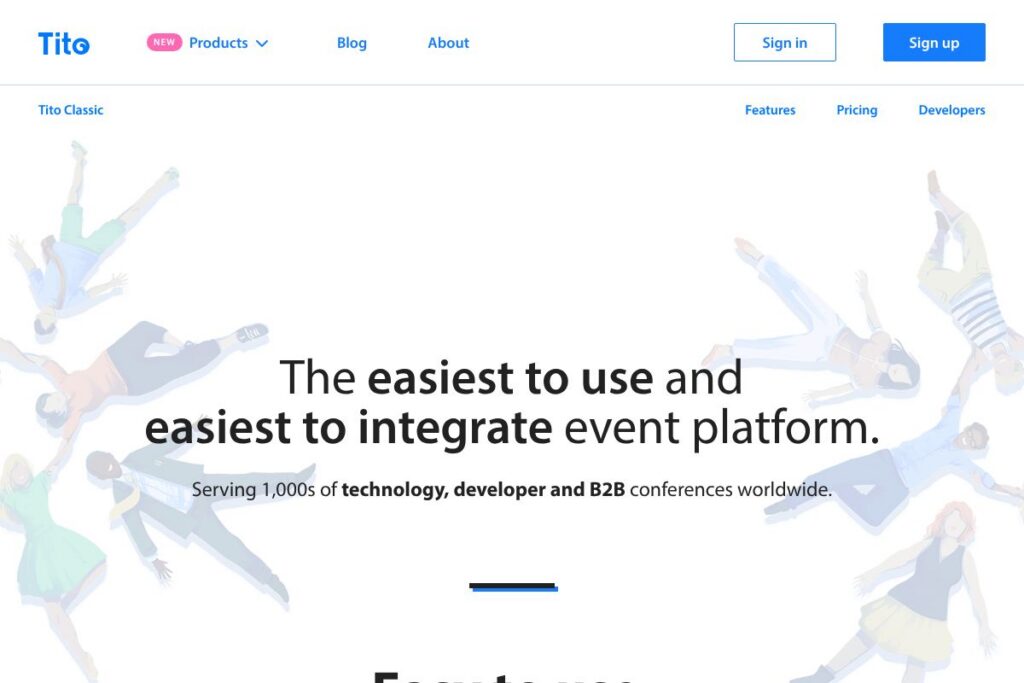
Tito is a purpose-built event registration and ticketing platform used widely by technology, developer, and B2B conferences. It is designed to make event setup fast for organizers while exposing developer-friendly integration points that let teams embed registration flows directly into their websites.
Compared with Eventbrite, Tito places more emphasis on embeddability and developer control rather than a marketplace-first approach. Compared with Cvent, Tito is positioned as a lighter, developer-oriented option for technical events that do not need the full enterprise event management stack. Compared with Splash, Tito focuses more on the registration and checkout experience with compact integrations rather than heavy marketing and design tooling.
All of this makes Tito particularly well suited to organizers who want a clean registration experience that can be embedded in their site, who need to build custom integrations, and who run developer- or technology-focused events where a no-friction checkout is important.
How Tito Works
Tito exposes a small, embeddable widget that you place on a page by including a single script and a widget element. The widget loads the registration UI in-place, so attendees register and buy tickets without being redirected away from your site; the widget script used by many customers is available as the Tito widget script.
Beyond the embeddable widget, teams use Tito’s web dashboard to create events, define ticket types, and manage attendee lists. For deeper integrations you can respond to JavaScript events, use webhooks, or connect via documented developer endpoints to synchronize attendees with CRMs, mailing lists, or analytics platforms. Practical workflows include embedding the widget in marketing pages, tracking conversions via analytics plugins, and exporting attendee data for on-site check-in systems.
What does Tito do?
Tito’s core feature set centers on fast event creation, a compact embeddable registration widget, developer-friendly integration points, and support for payments and attendee management. The platform emphasizes ease of use for organizers alongside tools developers can extend via code, plugins, and webhooks.
Embeddable Widget
The embeddable widget provides a self-contained registration UI that you can drop into any page with two lines of code. That approach keeps attendees on your site, reduces friction during checkout, and supports custom styling so the widget matches your event branding.
Developer APIs and Webhooks
Tito exposes programmatic hooks that let engineering teams automate workflows, import or export attendee data, and react to registration events. These integration points make it straightforward to connect Tito to CRMs, marketing automation platforms, or custom reporting systems.
Payments and Checkout
Ticketing and payment handling are handled within Tito’s checkout flow, supporting standard card payment processing and attendee invoicing where required. Organizers can manage orders, refunds, and tax handling from the dashboard while feeding financial data into accounting systems through exports or integrations.
Event Management Dashboard
The dashboard is designed for rapid event setup: create ticket types, manage capacity, view sales reports, and export attendee lists. Common organizer workflows include early-bird ticket setup, promo codes, and day-of check-in export for onsite scanning.
Integrations and Plugins
Tito supports out-of-the-box connectors and community plugins for analytics and tracking, and teams can add Google Tag Manager or Facebook tracking as needed. The platform’s JavaScript events and plugin hooks make it practical to capture registrations for attribution, ads, and reporting.
With these features Tito delivers a focused registration experience that balances organizer simplicity with the flexibility developers expect when embedding registration flows into conference websites.
Tito Pricing
Tito uses a commercial SaaS model with pricing details published and maintained by the company; exact rates and plan options are available directly from Tito. For up-to-date plan configurations, fees, and any volume or enterprise arrangements, view Tito’s pricing options.
What is Tito Used For?
Tito is commonly used for conference registration, meetups with paid tickets, workshops, and other professional events where a seamless registration widget and developer integration matter. Technical conference organizers use Tito to keep attendees on their site and to hook registration events into internal systems for badge printing and access control.
It is also a practical choice for event teams who need a predictable organizer workflow: quick event creation, simple ticket configuration, attendee exports, and integration hooks to tie registrations into CRM or analytics systems.
Pros and Cons of Tito
Pros
- Simple embeddable checkout: The widget makes it easy to keep attendees on your domain and requires only a small snippet of code to install.
- Developer-friendly integrations: Webhooks, JavaScript events, and plugin hooks let engineering teams automate workflows and connect Tito to internal tools.
- Focused feature set for conferences: The product targets conference and B2B event needs with ticketing, attendee exports, and sales reporting rather than an overloaded feature list.
- Proven at scale: Customers have processed substantial ticket volume and sales through the platform, supporting large technology and developer events.
Cons
- Limited enterprise feature set compared to some vendors: Organizations seeking a full-service enterprise event management suite may find fewer built-in marketing and onsite hardware features than large TMS providers.
- Customization requires developer work: While styling and JavaScript events are supported, deeper custom flows typically need engineering effort to implement and maintain.
Does Tito Offer a Free Trial?
Tito offers a free trial with no credit card required. New users can create their first event quickly and try the platform’s features without entering payment details; organizers often use the trial to test the embeddable widget and basic registration flows before committing to a plan.
Tito API and Integrations
Tito provides developer-focused integration options including JavaScript events, webhooks, and programmatic endpoints that let teams synchronize attendees and react to registration activity. The embeddable widget is delivered via the Tito widget script, and the company documents developer examples on its official site; see the Tito developers page for integration guides and examples.
Popular integrations include analytics and tag management tools, CRM synchronization, and export hooks for badge printing and on-site check-in systems.
10 Tito alternatives
Paid alternatives to Tito
- Eventbrite — A mainstream event ticketing marketplace and self-service platform that emphasizes discoverability and per-ticket fee models, often used for public events and meetups.
- Cvent — An enterprise-focused event management platform with a broad suite of planning, registration, and onsite services for large conferences and corporate events.
- Splash — A platform that combines event marketing, design, and registration, useful when you need strong branding and RSVP campaigns alongside ticketing.
- Bizzabo — A conference-focused platform that blends registration, event experience, and analytics for mid-market and enterprise events.
- Ticket Tailor — A lightweight ticketing service with simple pricing models, often chosen by small to medium events that want straightforward fee structures.
- Hopin — A virtual and hybrid events platform that includes registration, streaming, and expo features for online-first events.
- Attendify — Focused on event apps and attendee experience, Attendify pairs registration with mobile app features and engagement tools.
Open source alternatives to Tito
- Pretix — An open source ticketing system with a modular architecture and plugins for payments, invoicing, and check-in workflows.
- Attendize — A self-hosted ticketing and event management system that supports paid events and attendee management for teams that want full control.
- OSEM — An open source conference management system suited to academic and community-run conferences that need customizable workflows.
Frequently asked questions about Tito
What is Tito used for?
Tito is used for event registration and ticketing, mainly for conferences and B2B events. Organizers use it to sell tickets, manage attendees, and embed a registration flow directly into their websites.
Does Tito provide an embeddable widget?
Yes, Tito offers an embeddable registration widget. The widget is installed by adding a small script and a widget element to your site, keeping checkout on your pages and supporting custom styling.
Can Tito integrate with other systems?
Yes, Tito supports integrations via webhooks, JavaScript events, and developer endpoints. These hooks let you connect registrations to CRMs, analytics, and onsite check-in systems.
Is there a trial available for Tito?
Yes, Tito provides a free trial with no credit card required. New users can create events and test features before selecting a paid option.
How does Tito handle payments?
Tito handles payments through its checkout flow and supports standard card processing and order management. Organizers can manage refunds and financial exports from the dashboard and connect payment data to accounting systems via exports or integrations.
Final Verdict: Tito
Tito excels at making event registration straightforward for organizers while offering the developer tools that technical teams need to embed and extend the registration experience. Its embeddable widget, JavaScript events, and webhook support make it a natural fit for developer-heavy conferences and B2B events where keeping attendees on the organizer’s site is a priority.
Compared with Eventbrite, which commonly uses a per-ticket fee model and marketplace features, Tito prioritizes embeddability and developer control; for teams that value an integrated checkout and programmatic access, Tito often provides a clearer path even if pricing comparisons should be checked directly with each provider. For organizers who need enterprise-grade marketing automation or a full-service event operations suite, platforms like Cvent may offer broader native capabilities, but Tito remains a strong choice when ease of integration and a compact registration experience matter most.