LiveChat: An Overview
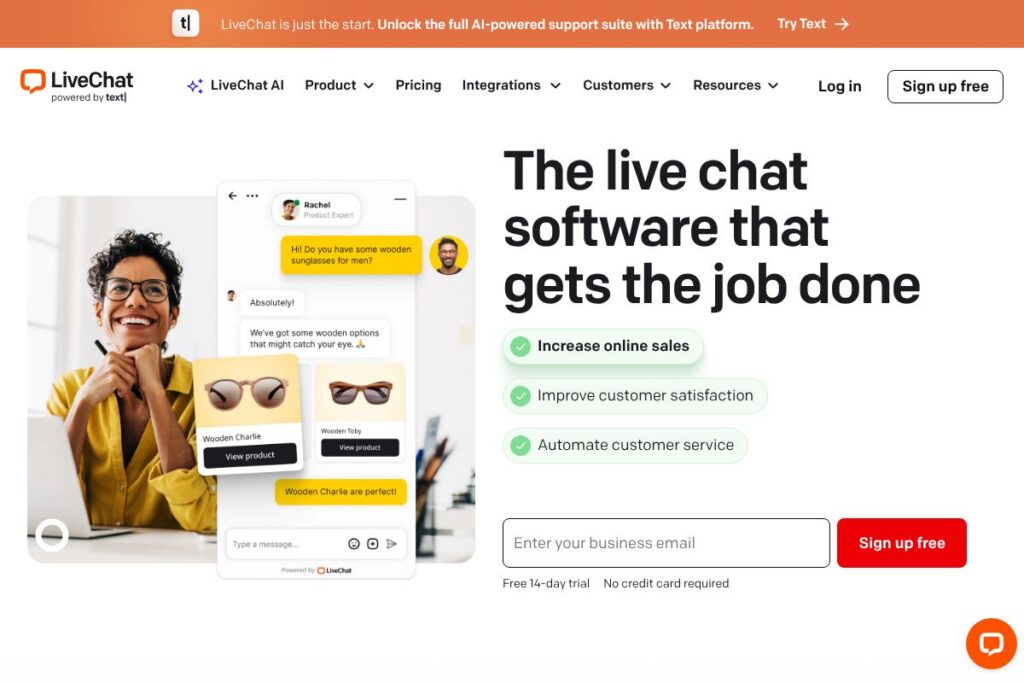
LiveChat is a cloud-based live chat and messaging platform designed for sales and customer support teams. It places a chat widget on websites, centralizes conversations in a single agent app, and pairs human agents with automated assistants to reduce response time and scale routine interactions. The platform is widely used by ecommerce stores and B2B sites that need real-time help, guided selling, and measurable chat outcomes.
LiveChat competes with products like Intercom, Zendesk, and Drift. Compared with Intercom, LiveChat focuses on a simpler, chat-first experience with strong ecommerce connectors; Zendesk offers a broader helpdesk and ticketing suite while LiveChat emphasizes real-time sales and conversion; Drift doubles down on conversational marketing for enterprise pipelines, where LiveChat provides an easier on-ramp for teams that want immediate chat functionality. For organizations looking for quick setup and targeted ecommerce lift, LiveChat is often a better fit than more complex suites.
LiveChat does real-time chat, chatbot automation, and integrated analytics well, making it a practical choice for online retailers, small support teams, and mid-market B2B vendors who need measurable sales lift and faster support. Its strengths include quick deployment, strong third-party integrations, and AI tools that offload repetitive tasks while keeping agents in control.
How LiveChat Works
The LiveChat widget is embedded into your website and mobile apps, then routes visitor messages into an agent-facing application where teams respond across channels. Agents see visitor context such as recent pages, order history, and referral data to personalize responses and recommend products or actions. For ecommerce teams this typically means starting chats with proactive greetings, sending product links, and converting sessions to orders.
Automation runs in parallel with human agents; you can deploy ChatBot flows to answer common questions, collect lead details, and qualify prospects before handing off to a live agent. Agents use Copilot within the app to get suggested replies, summaries, and next-step guidance so they respond faster and more consistently. Reporting captures metrics like response time, chat ratings, conversion uplift, and agent performance to help teams iterate on staffing and scripts.
LiveChat features
LiveChat groups core capabilities around live messaging, automation, and analytics. Core capabilities include a customizable website chat widget, bot automation via ChatBot, AI assistance for agents with Copilot, omnichannel message routing, and ecommerce integrations that connect chat to carts and orders. Recent additions emphasize deeper AI support for faster agent responses and out-of-the-box ecommerce connectors.
Let’s talk LiveChat’s Features
Website Chat Widget
The widget is easy to embed and customize for branding, placement, and behavior. It supports proactive greetings, targeted messages per page, and mobile-friendly layouts, which helps teams capture attention and initiate conversations at high-value moments.
Chatbots & Automation
ChatBot lets you automate common flows such as order status, returns, and lead capture. Bots can route qualified leads to sales agents, resolve routine support questions, and operate outside business hours to reduce ticket volume.
Copilot AI for Agents
Copilot provides real-time suggested replies, summaries of long threads, and context-aware prompts so agents respond faster and maintain consistent tone. It reduces cognitive load on agents and shortens average handling time for common queries.
Omnichannel Inbox
LiveChat aggregates messages from web chat, email, social channels, and messaging apps into a single interface. This centralization reduces context switching and ensures teams can manage conversations from one place.
Ecommerce Integrations
The platform connects to major ecommerce systems to surface cart contents, order history, and product data inside chats. These integrations make it straightforward to recommend products, apply discounts, and complete purchases during a conversation. See the integrations page for platform-specific connectors.
Reporting & Analytics
Built-in reports track metrics such as response time, chat rating, revenue influenced by chat, and agent activity. Reports are designed for non-experts so teams can monitor chat performance and identify coaching opportunities without analyst support.
Security & Compliance
LiveChat includes role-based access, audit logs, and industry-standard transport security to protect customer data. For larger customers, enterprise options include additional controls and compliance features; consult the security overview for specifics.
With these features combined, LiveChat helps teams convert visitors into buyers and resolve customer issues quickly, while giving managers the data and controls needed to scale chat operations.
LiveChat pricing
LiveChat uses a subscription SaaS pricing model with plans for small teams up to enterprise customers, and it advertises a low entry price for basic use. The vendor highlights a free trial and a starting subscription rate for single-site or small-team usage, while enterprise customers receive custom pricing and dedicated onboarding.
Monthly Billing:
Entry-level – $19/month (base access for one account, chat widget, basic reporting, free trial available)
Team – Contact sales for a tailored monthly rate (includes multi-agent seats, advanced routing, integrations)
Annual Billing:
Entry-level – Annual billing is available and typically reduces the effective monthly cost for committed customers; contact LiveChat for current annual rates. For multi-seat deployments, annual agreements include volume discounts and optional enterprise add-ons.
Enterprise
Enterprise – Custom pricing (scalable seats, SSO, priority support, dedicated onboarding). To discuss large deployments and tailored SLAs, request a call through LiveChat’s enterprise contact form.
For the most current plan breakdown and any promotional offers, view LiveChat’s current pricing options or request a personalized quote through their contact channels.
What is LiveChat Used For?
LiveChat is commonly used to drive online sales with real-time conversations, where agents recommend products, answer objections, and close purchases during the session. Ecommerce teams use LiveChat to run targeted campaigns, recover abandoned carts, and increase average order value by providing tailored product suggestions.
Customer support teams use LiveChat to resolve technical questions, provide order updates, and triage issues before they turn into tickets. B2B teams use the platform for lead qualification and meeting scheduling, combining chatbots with live handoffs to speed up the sales funnel.
Pros and Cons of LiveChat
Pros
- Quick setup: LiveChat installs with a short snippet and a configurable widget, which means teams can go from signup to live conversations in hours, not weeks.
- Ecommerce-focused integrations: Deep connectors to platforms like Shopify and WooCommerce let agents view cart contents and assist shoppers in-context, which supports higher conversion rates and larger order values.
- AI-assisted agent tooling: Copilot and ChatBot automate repetitive tasks and suggest replies, reducing response times and improving consistency across agents.
- Centralized inbox: Aggregating multiple channels into one agent app reduces context switching and simplifies daily workflows.
Cons
- Customization limits for complex workflows: Highly customized routing or multi-product support centers may require additional configuration or third-party middleware to achieve advanced setups.
- Scaling costs: As the number of agents and channels grows, subscription costs can increase significantly for larger teams; enterprise negotiations are often required for favorable volume pricing.
- Feature overlap with larger suites: Organizations that need a full helpdesk, deep CRM, and complex workflow automation may find a dedicated platform like Zendesk or a bundled suite more comprehensive.
Does LiveChat Offer a Free Trial?
LiveChat offers a 14-day free trial with no credit card required. The trial includes access to the chat widget, agent app, and basic automation so teams can evaluate setup, integrations, and the impact on sales or support before committing to a subscription.
LiveChat API and Integrations
LiveChat provides a developer API and webhooks for programmatic access to conversations, customers, and settings. The API documentation outlines endpoints for sending messages, retrieving chat history, and integrating with internal systems.
The platform offers ready-made integrations with ecommerce platforms and business tools including Shopify, WooCommerce, Salesforce, Slack, Facebook Messenger, WhatsApp, and Google Analytics. These connectors let teams synchronize orders, notify agents, and extend chat functionality into existing workflows; see the integrations directory for details.
10 LiveChat alternatives
Paid alternatives to LiveChat
- Intercom — A conversational platform that combines messaging, product tours, and helpdesk capabilities for growth and enterprise teams.
- Zendesk — A full helpdesk and customer service suite that includes live chat, ticketing, and omnichannel support for larger support organizations.
- Drift — Focused on conversational marketing and revenue acceleration, with chatbots and buyer intent tools for B2B sales teams.
- Freshchat — Part of the Freshworks suite, offering modern messaging, bots, and integrations for support and sales teams.
- Tidio — Chat and chatbot platform built for small ecommerce stores, with an emphasis on simplicity and conversion tools.
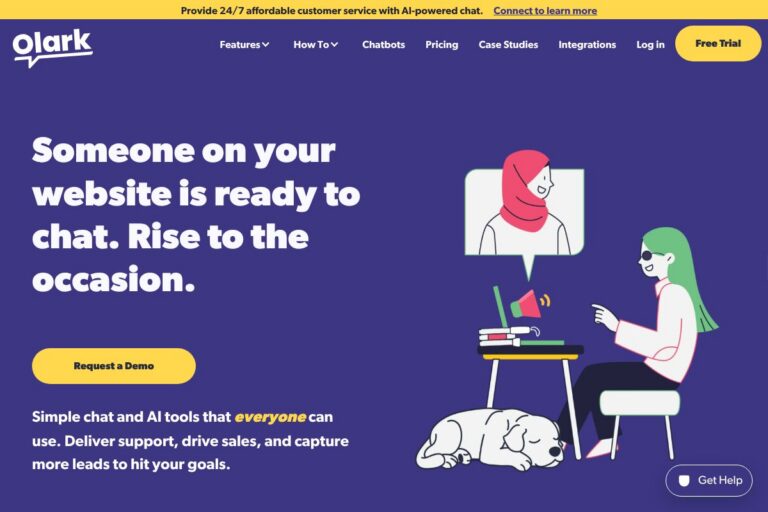
- Olark — Simple live chat focused on ease of use and straightforward reporting for small businesses.
- HubSpot Live Chat — Included with HubSpot CRM, combines chat with contact records and marketing automation for inbound teams.
Open source alternatives to LiveChat
- Chatwoot — An open source customer messaging platform that centralizes conversations and supports self-hosting with integrations for popular channels.
- Rocket.Chat — A team communication platform that can be extended for customer messaging and self-hosted for full data control.
- Mibew Messenger — A lightweight open source live support application focused on website chat with self-hosting options.
- Zammad — An open source helpdesk that includes chat integration and ticketing for organizations preferring self-hosted systems.
Frequently asked questions about LiveChat
What is LiveChat used for?
LiveChat is used for real-time customer messaging to support sales and customer service. Teams use it to convert website visitors, answer product questions, and triage support issues quickly.
Does LiveChat offer chatbot automation?
Yes, LiveChat supports chatbot automation through its ChatBot product. ChatBot can handle routine requests, collect leads, and escalate conversations to agents when needed.
How much does LiveChat cost to start?
LiveChat pricing starts from approximately $19/month for entry-level usage. Larger teams and enterprise deployments use tiered subscriptions or custom quotes depending on seats and required features.
Can LiveChat integrate with ecommerce platforms?
Yes, LiveChat integrates with ecommerce systems like Shopify and WooCommerce. These integrations surface cart and order data in the agent app so teams can recommend products and assist checkout directly in the chat.
Does LiveChat provide an API for developers?
Yes, LiveChat offers a developer API and webhooks. The API documentation provides endpoints for messaging, retrieving chat history, and automating workflows.
Final Verdict: LiveChat
LiveChat is a pragmatic, chat-first solution that excels at converting website visitors and streamlining real-time customer support, especially for ecommerce and mid-market B2B teams. Its quick setup, targeted ecommerce integrations, and AI-assisted agent tools make it a solid choice for organizations that need measurable sales lift without a heavy implementation project.
Compared with Intercom, LiveChat tends to be simpler to deploy and more focused on pure chat and ecommerce outcomes, while Intercom targets broader product-led growth and conversational marketing use cases. LiveChat’s accessible entry point at $19/month makes it appealing to smaller teams, while enterprise buyers can negotiate custom plans for larger deployments and advanced compliance needs.
If you need a dependable live chat platform that pairs human agents with automation and provides actionable reports, LiveChat is a strong candidate to evaluate. For deeper helpdesk workflows or a full CRM bundle, compare LiveChat with broader suites like Zendesk to determine which aligns best with your support and growth strategy.