Threema: An Overview
Threema is a privacy-focused instant messenger developed and operated in Switzerland, built to provide end-to-end encrypted messaging, voice and video calls, and secure file transfer for individuals and organizations. The product family includes Threema Private for individual users, Threema Work for managed corporate deployments, and Threema OnPrem for self-hosted installations on private infrastructure. Each edition emphasizes minimal metadata, a zero-knowledge server architecture, and cryptography designed to prevent retrospective decryption.
Compared with mainstream messengers such as WhatsApp and Telegram, Threema prioritizes data sovereignty and low metadata collection rather than advertising-driven features. Versus collaboration platforms like Microsoft Teams and Slack, Threema focuses on private, encrypted exchange and offers enterprise features such as centralized administration and self-hosting that suit regulated environments. All of this makes Threema especially well suited for security-critical organizations, public authorities, healthcare providers, and individuals who require verifiable confidentiality and compliance.
Threema does a few things very well: strong, auditable end-to-end encryption combined with options for anonymous accounts, centralized management for teams, and a self-hosting path for full control over data. This combination is aimed at organizations that need both modern messenger features and documented legal certainty around data processing.
How Threema Works
Threema encrypts messages, voice and video calls, and files end to end so only intended recipients can decrypt the content on their devices. Keys are generated and stored on user devices, while the servers only relay encrypted payloads and retain minimal routing metadata that is automatically purged after delivery, supporting the zero-knowledge principle.
For organizations, Threema Work provides a management cockpit to provision users, apply permission policies, and integrate with identity and device management systems. Threema OnPrem allows running the complete server stack in a private data center, so messages never leave an organization controlled environment, while the Threema Gateway exposes API endpoints to integrate secure messaging into existing systems and automation.
Threema features
Threema’s feature set centers on private communication and administrative control for teams. Core capabilities include end-to-end encrypted text messaging, group chats, voice and video calls, contact verification, file sharing, and management functions for enterprises. The product line has evolved to include scalable admin tooling and a Gateway API for automated message sending and system integration.
The platform includes several powerful capabilities worth highlighting:
End-to-end encryption
All message types, calls, and files are encrypted end to end using open-source cryptographic primitives, with Perfect Forward Secrecy to prevent retrospective decryption if a key is compromised. This protects both user and organizational communication from interception and ensures only recipients can read content.
Zero-knowledge server architecture
Messages are stored on servers only in encrypted form and are deleted after successful delivery, minimizing persistent data exposure. The server design prevents Threema operators from accessing message content, meeting strict confidentiality requirements for sensitive communication.
Anonymity and minimal identity data
Users can create a Threema ID without providing a phone number or email address, enabling anonymous but authenticated messaging. Contact lists and identity decisions remain on user devices, which reduces linkage of communication to personal identifiers.
Management cockpit and enterprise controls
Threema Work offers centralized user provisioning, role-based permissions, and policy controls that simplify administration for IT teams. These tools help organizations enforce compliance, control data flows, and manage large user bases without sacrificing encryption guarantees.
Self-hosting with Threema OnPrem
OnPrem provides a deployable server stack for organizations that require full infrastructure control, enabling data residency and integration with internal networks. This is designed for high-security environments such as defense, critical infrastructure, and regulated healthcare providers.
Threema Gateway and automation
The Gateway exposes APIs for sending messages and integrating secure notifications into existing systems and services, useful for alerts, two-way automation, and machine-to-person workflows. This allows organizations to combine secure human communication with automated processes while keeping content encrypted.
With Threema you get a compact set of privacy-first messaging capabilities plus the administrative and hosting options enterprises need to meet compliance and operational requirements. The biggest benefit is the ability to run private, auditable communications that leave minimal metadata footprints while still supporting modern collaboration patterns.
Threema App Pricing
Threema uses a mixed licensing model rather than a single public price list, with paid app licenses for individuals and tiered licensing or custom quotes for business and self-hosted deployments. For enterprise needs, Threema emphasizes subscription or license-based plans that can include management features, support, and self-hosting options.
Business and enterprise
Threema Work – Contact Threema for licensing options and to evaluate the managed business offering through the Threema Work product page. The offering typically includes admin controls, provisioning, and optional support, and is priced by seats or bundled licenses. View the Threema Work overview on the official site for guidance and to request a trial or quote.
Self-hosting
Threema OnPrem – Pricing for OnPrem deployments is customized according to deployment scope, support level, and integration requirements. Organizations interested in self-hosting should review the OnPrem overview and contact sales for a tailored proposal and deployment plan.
For current licensing models, trial offers, and to request a quote, consult the Threema product pages: explore Threema Work, Threema OnPrem, and Threema Private on the official site.
What is Threema Used For?
Threema is used for secure day-to-day messaging, group collaboration, and one-to-one communication where confidentiality is essential. Organizations use it for private team chats, secure executive communication, out-of-band messaging for business continuity, and sharing sensitive documents without exposing data to third-party processors.
Individual users choose Threema when they want private personal chats without linking accounts to phone numbers or email, or when they need provable end-to-end encryption for calls and files. Regulated industries such as healthcare, public administration, and manufacturing rely on Threema for GDPR-compliant messaging and to reduce compliance risk.
Pros and Cons of Threema
Pros
- Strong cryptography and forward secrecy: End-to-end encryption for messages, calls, and files with Perfect Forward Secrecy reduces the risk of retrospective decryption. This makes Threema suitable for highly sensitive communication.
- Data sovereignty and self-hosting options: Organizations can choose Threema OnPrem to operate the messenger on their own infrastructure, which supports strict compliance and residency requirements. This provides full control over data flows and reduces third-party exposure.
- Minimal metadata and anonymous IDs: Users can register without a phone number or email, and servers retain only the technical minimum of metadata. This limits profiling and tracking while preserving usability for secure contacts.
- Centralized administration for enterprises: Threema Work provides an admin cockpit for provisioning, policy control, and permission management, which helps IT teams manage secure messaging at scale.
Cons
- Paid licensing for advanced features: Commercial and self-hosted editions require purchased licenses or enterprise agreements, which may be a barrier for organizations seeking fully free alternatives. Pricing is quote-based for larger deployments.
- Smaller ecosystem than mainstream messengers: Threema has fewer third-party integrations and a smaller user base compared to consumer platforms like WhatsApp or Telegram, which can limit adoption within organizations that rely on broad external messaging reach.
Does Threema Offer a Free Trial?
Threema offers a 30-day free trial for Threema Work with up to 30 users. The trial requires no payment details and provides access to core management features and secure messaging so organizations can evaluate administration, provisioning, and day-to-day use before committing to a license.
Threema API and Integrations
Threema provides the Threema Gateway API for developers to send messages and integrate secure notifications into existing systems, with documentation and examples available in the Gateway docs. The Gateway is designed for automated alerts, system notifications, and limited two-way interactions while maintaining encrypted transport.
For enterprise deployments, Threema Work supports administrative integrations and identity management features that simplify provisioning and policy enforcement; interested teams should consult the Threema Work documentation and Gateway documentation for technical specifics and integration options.
10 Threema alternatives
Paid alternatives to Threema
- Microsoft Teams — A collaboration platform that combines chat, meetings, and file storage, with extensive integrations and enterprise management features suited to large organizations.
- Slack — Team messaging with rich integrations, searchable message history, and developer tooling that supports widespread app connectivity and workflow automation.
- Wire — A privacy-focused messenger offering end-to-end encryption with business licensing options and support for workspaces and guest accounts.
- Mattermost — An on-premise or hosted team chat platform designed for DevOps and regulated environments, offering self-hosting and full control over data.
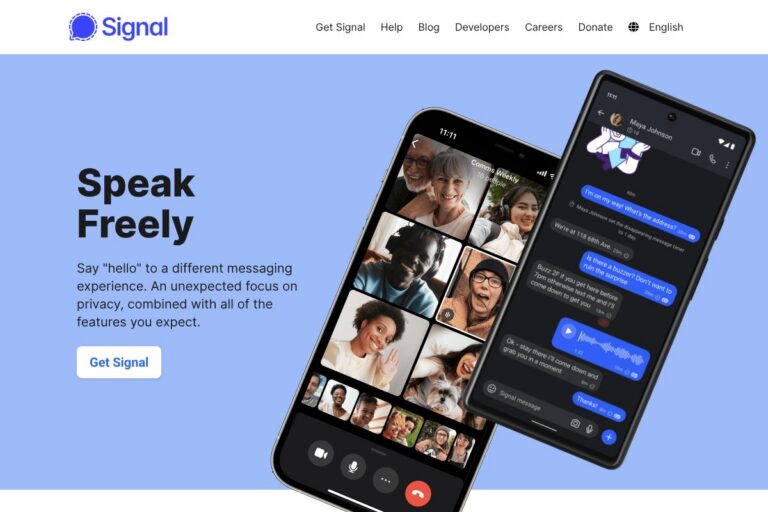
- Signal (Enterprise offerings) — Known for strong encryption and open-source clients, Signal also has enterprise-focused deployment guidance and guarded messaging suitable for privacy-centric teams.
- Element (Matrix) — A client for the Matrix protocol offering federation and self-hosting options, used for secure team communication with flexible infrastructure choices.
Open source alternatives to Threema
- Signal — End-to-end encrypted messaging app with open-source clients and server code, widely recognized for its privacy model and strong cryptography.
- Matrix / Element — An open protocol and client ecosystem that enables decentralized, self-hosted messaging with end-to-end encryption and bridging to other networks.
- Rocket.Chat — An open source team chat platform that can be self-hosted, offering integrations, channels, and administrative controls for organizations seeking data control.
- Mattermost — Mentioned above as open source, Mattermost supports self-hosting for complete data sovereignty and is used in regulated environments.
Frequently asked questions about Threema
What is Threema used for?
Threema is used for secure, end-to-end encrypted messaging and calls for individuals and organizations. It supports private one-to-one chats, group communication, file transfer, and business-grade administration for compliance-sensitive deployments.
Does Threema offer self-hosting options?
Yes, Threema offers Threema OnPrem for self-hosted deployments. Organizations can operate the complete server stack on their own infrastructure to retain full control over message storage and data residency.
Can Threema be used anonymously?
Yes, Threema allows anonymous accounts via Threema IDs without requiring a phone number or email. This enables private and authenticated communication while minimizing personal data exposure.
Does Threema integrate with other systems?
Threema provides the Threema Gateway API for integrations and automated messaging. Enterprises can also use Threema Work administration features to integrate provisioning and identity workflows with existing IT systems.
Is Threema compliant with GDPR?
Threema is designed to support GDPR compliance through minimal data retention, zero-knowledge architecture, and data residency options. Businesses can document processing and choose self-hosted or managed options to meet regulatory requirements.
Final Verdict: Threema
Threema is a focused choice for anyone who needs verifiable confidentiality, low metadata footprints, and options for centralized administration or complete self-hosting. It combines audited cryptography, anonymous identity options, and enterprise management to meet legal and operational needs in regulated sectors.
Compared with Signal, which is free and open source, Threema differentiates itself through formal business offerings, a management cockpit for provisioning, and an on-premises deployment path that is sold under commercial licensing. Organizations that require centralized control, documented compliance, or on-premises operation will find Threema a better fit, while teams seeking a cost-free, open-source client with wide consumer adoption may prefer Signal.